






Why Mercedes' F1 dominance is showing its first cracks
Mercedes remains the team to beat in Formula 1, but recent sessions in China revealed that its performance advantage comes with a significant vulnerability tied to its aggressive energy management. The team's pursuit of peak power is now exposing reliability risks that its rivals could exploit over the course of the season.
Why it matters:
Mercedes has set the benchmark for managing the complex 2026 power unit regulations. However, its apparent stumble in China—where George Russell's car shut down in qualifying due to a battery charging issue—signals that even the best system can be pushed past its limit. This moment reveals that the fight for performance is now a high-stakes balancing act between speed and reliability, opening a potential pathway for chasing teams like Ferrari to close the gap.
The details:
- The Chinese GP weekend highlighted a clear performance hierarchy, with Mercedes at the front, but also illustrated the fine line the team is walking.
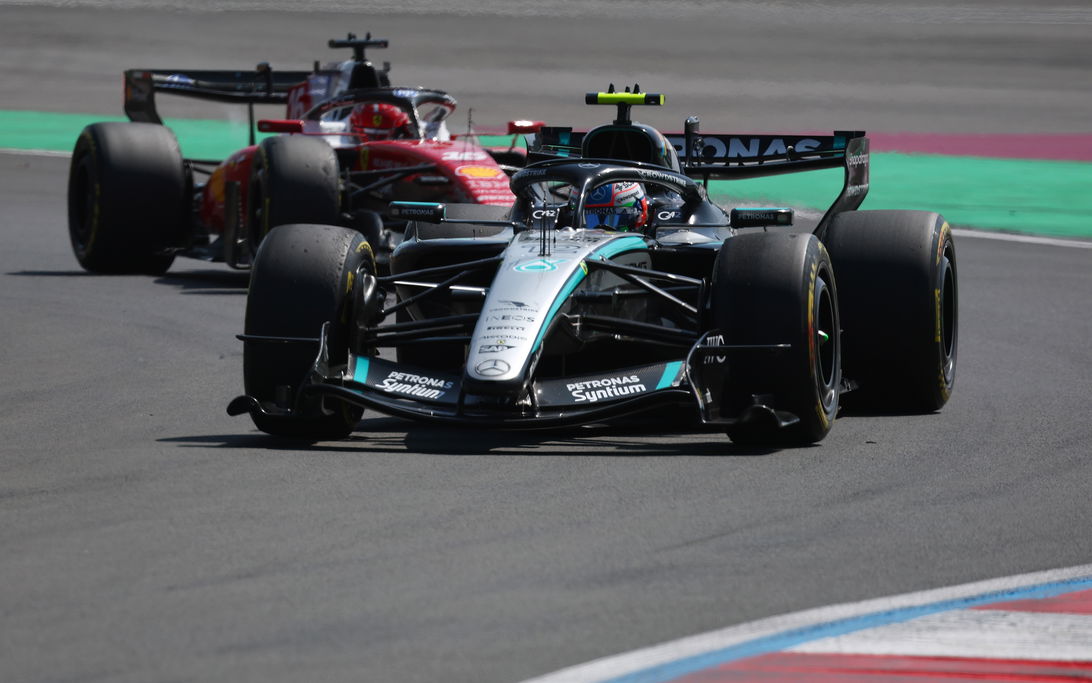
- In the Sprint, Lewis Hamilton's Ferrari exploited its smaller turbo to take an early lead, engaging in a fierce battle with George Russell's Mercedes until Hamilton's tires grained from the defensive effort.
- The more telling moment came in Grand Prix qualifying. Ferrari had begun adapting its energy management strategy to mirror Mercedes' approach.
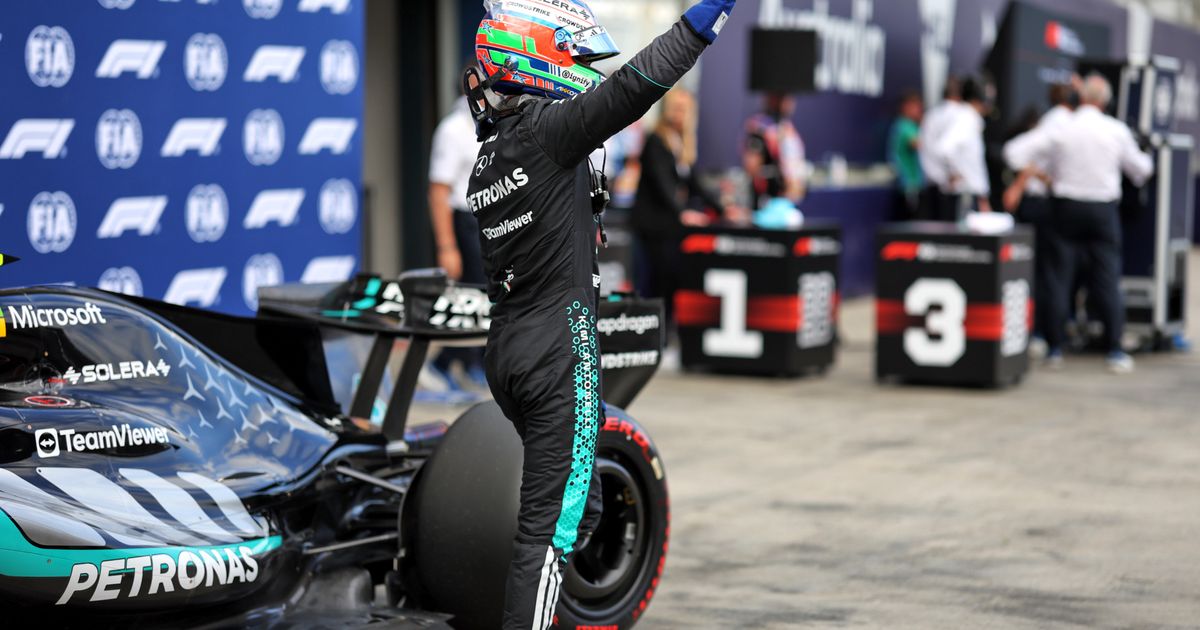
- Russell's Failure: During his first Q3 run, Russell's W16 suddenly stopped on track. The car exhibited a sudden engine brake activation and a partial gearbox lock-up, which engineers identified as a direct consequence of an extreme battery charging strategy.
- The Technical Cause: Pushing energy recovery to its limits can generate false signals within the system regarding wheel speed or rotation. When the system detects such an error, its electronic protection protocols are triggered, leading to a shutdown—exactly what halted Russell.
- This issue is part of a broader pattern observed over the weekend, where other cars also experienced moments of instability. Power spikes caused by similar system misreads when exiting corners can send unexpected surges to the wheels, leading to a loss of rear control.
What's next:
The incident forces a strategic question for every team on the grid. Has Mercedes, in securing its early lead, accepted greater reliability risks for immediate performance? Conversely, have teams like Ferrari consciously chosen a slightly more conservative PU strategy that could pay dividends over a full season's distance as reliability becomes paramount?
The technical revolution is now impacting reliability as much as outright pace. Mercedes' vulnerability in Shanghai may be a one-off glitch, or it could be the first sign that the team's extreme approach has a tangible cost. As the season develops, the championship may not be won solely by the fastest car, but by the team that best manages the trade-off between peak performance and consistent finish.
Original Article :https://racingnews365.com/why-mercedes-became-as-vulnerable-as-its-f1-rivals