





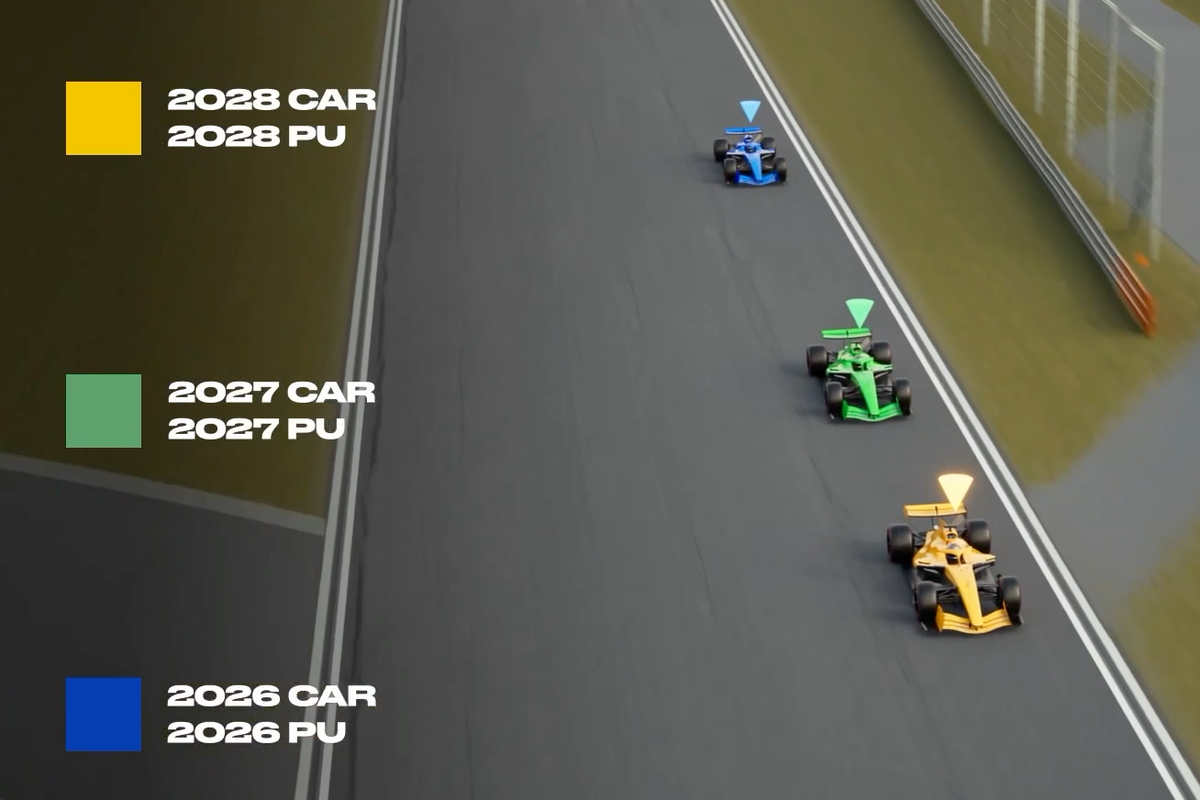
Revealed: How F1 Cars Will Be Up to Four Seconds Faster by 2028
Formula 1 has finalized a two-step plan to fix the energy-starved nature of its 2026 cars, and early simulation data points to a dramatic leap by 2028. Cars are expected to be faster down the straights, maintain top speed longer, and potentially slash lap times by up to four seconds.
Why it matters:
The current regulations force drivers into excessive energy management, triggering embarrassing speed drop-offs at the end of long straights that hurt both the racing spectacle and driver confidence. By rebalancing the power unit formula, F1 is tackling a fundamental flaw rather than letting it fester. If the gains materialize, the sport could return to genuine lap record pace at power-rich tracks.
The details:
- Power unit shift: The ICE-to-battery split moves from roughly 53/47 to 58/42 in 2027 and 60/40 by 2028. This is achieved through a 5% fuel flow increase next year, rising to 13% in 2028, alongside a cut in max battery deployment from 350kW to 300kW.
- Harvesting upgrades: Max harvesting climbs from 350kW to 375kW in 2027 and hits 400kW in 2028, with battery capacity growing from 4MJ to 4.5MJ and then 5MJ.
- Lap time impact: Simulations project roughly a two-second gain in 2027 and about three seconds by 2028, rising to four seconds at energy-rich venues like Shanghai. Untamed, the 2028 machinery could start breaking lap records.
- Straights fixed: Speed traces show cars maintaining acceleration far longer, directly addressing the "soul-destroying" performance cliff seen this year at circuits like Albert Park.
What's next:
2027 will serve only as a halfway house, delivering partial relief while the full fix waits until 2028. Max Verstappen, among the loudest critics, has acknowledged the direction is correct even if he wanted the bigger step sooner. The FIA may still trim downforce for safety, but if left unchecked, the 2028 package could produce the fastest F1 cars ever seen at several circuits.
Original Article :https://www.the-race.com/formula-1/how-f1-cars-will-be-up-to-four-seconds-faster...