






Norris Details McLaren's Remaining Engine Deficit to Mercedes
Lando Norris acknowledged McLaren's power unit progress at the Chinese Grand Prix but confirmed the team still loses significant time to Mercedes on Shanghai's long straights, highlighting an ongoing performance gap. Meanwhile, Team Principal Andrea Stella raised a philosophical question about new F1 energy management rules, arguing they can inadvertently reward driver mistakes, which he labeled a "counter-intuitive" flaw in the sport's competitive DNA.
Why it matters:
McLaren's chase to match Mercedes' power unit performance is a critical battleground in their quest to become consistent race winners. Simultaneously, Stella's critique touches on a fundamental tension in modern F1: balancing complex technical regulations with the pure, intuitive driver skill that defines the sport's core appeal. Both issues speak to the multi-layered challenge of competing at the highest level.
The details:
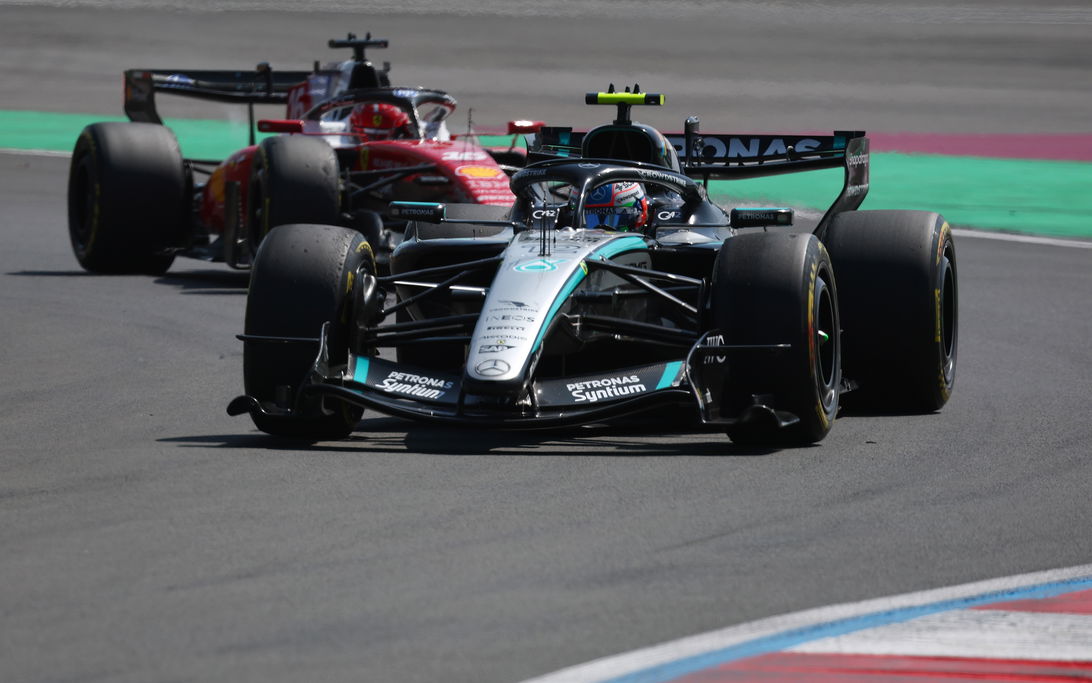
- Straight-Line Deficit: Norris, who qualified sixth in China, stated the MCL38 was losing "a good tenth and a half" just on the main straight compared to the Mercedes W15, a gap the team does not yet fully understand.
- Acknowledged Progress: Despite the deficit, Norris emphasized the team has "certainly taken a step forward" with its power unit operations and is working hard to close the remaining gap.
- A Rulebook Paradox: Andrea Stella pointed out a bizarre consequence of the current energy deployment regulations. He explained that if a driver makes an error and is forced to lift off the throttle early in a corner, they may save enough energy to deploy more aggressively later on the straight, potentially resulting in a faster overall sector time.
- This creates a situation where a mistake can be strategically beneficial, which Stella argues contradicts the intuitive logic of racing.
- Philosophical Debate: Stella framed this not just as a technical issue, but a high-level question for the sport: Should F1 preserve its traditional DNA where driver error is always penalized, or accept that such "counter-intuitive dynamics" become part of the new competitive landscape?
What's next:
McLaren's immediate focus remains on understanding and eliminating its straight-line speed deficit to Mercedes, a crucial step for challenging for victories on power-sensitive circuits. On a broader scale, Stella's comments may fuel discussion among the FIA, teams, and drivers about whether the sport's technical regulations are adequately aligned with the fundamental principle that the best lap should come from a perfect drive, not a strategically managed mistake.
Original Article :https://www.gpblog.com/en/news/norris-spells-out-the-engine-gap-mclaren-must-sti...