



George Russell counters Max Verstappen's criticism with Ayrton Senna comparison
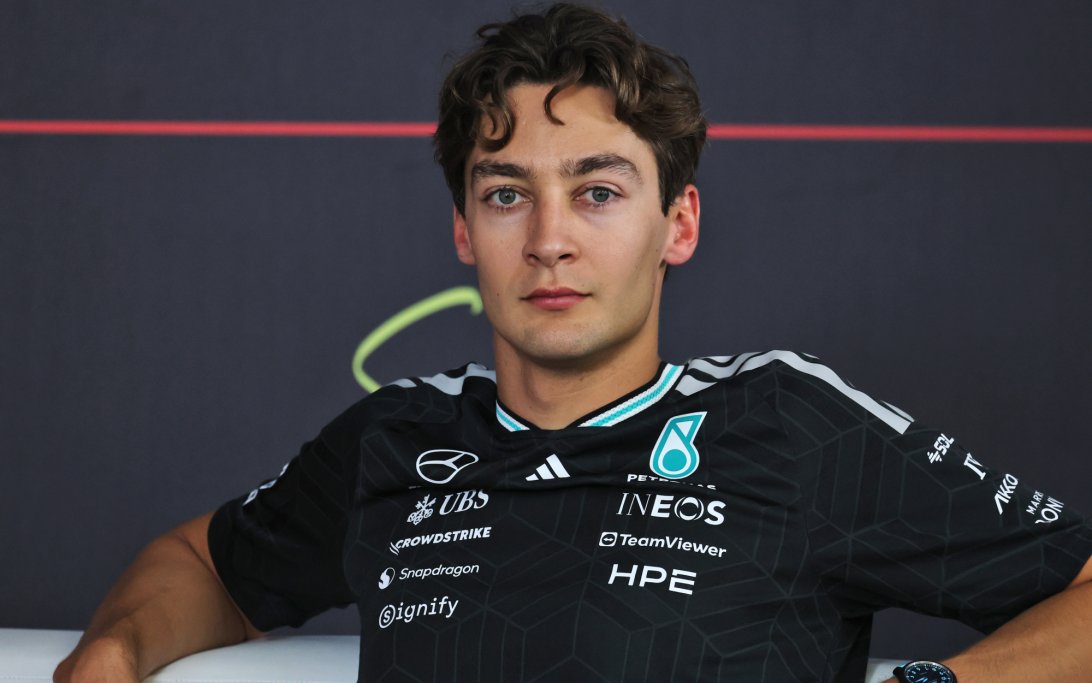
Mercedes driver George Russell has defended Formula 1's new 2026 power unit regulations, using a comparison to Ayrton Senna's unique driving style to counter Max Verstappen's criticism that the rules feel like "Formula E on steroids." Russell, who completed the most laps in pre-season testing, argues that each era of F1 cars has its own driving "quirk" and that the required energy management is simply the characteristic of this new generation.
Why it matters:
The public disagreement between two top drivers highlights a fundamental debate about the direction of Formula 1's technical evolution. Verstappen's vocal criticism represents concerns that excessive energy management could detract from flat-out racing, while Russell's pragmatic defense suggests top drivers will adapt to—and even find enjoyment in—the new technical challenge, much as legends did in past eras.
The details:
- Max Verstappen launched strong criticism during testing, labeling the 2026 power unit's energy management demands as "anti-racing" and akin to "Formula E on steroids."
- The new regulations mandate a 50-50 power split between the internal combustion engine and a significantly more powerful electrical system, with battery storage leaping from 120kW to 350kW.
- To prevent energy depletion during a race, drivers must frequently "lift and coast" into corners, conserving battery charge rather than braking at the absolute limit.
- George Russell countered this view by drawing a historical parallel, noting that Ayrton Senna developed a unique "blip and throttle" technique in the 1980s turbo era to keep the turbocharger spooled up and balance the car.
- Russell stated that while lift-and-coast is more pronounced now, the core principles of driving on the limit remain, and his initial experience in Bahrain and Barcelona testing was positive.
- He completed 688 laps (over 3,500 km) in testing, giving him substantial early data on the new cars' behavior.
What's next:
The true impact of these regulations will be tested under the pressure of race conditions, starting with the season opener in Bahrain. Russell acknowledged that the street circuit in Melbourne could present a greater challenge due to its layout. The early season will reveal whether Verstappen's criticisms hold true during wheel-to-wheel combat or if, as Russell suggests, drivers and teams quickly master the new energy management paradigm, turning it into another layer of strategic competition.
Original Article :https://racingnews365.com/george-russell-uses-ayrton-senna-comparison-to-quash-m...