




Ferrari's Vasseur: Cost cap will dictate 2026 upgrade strategy, requiring 'clever' planning
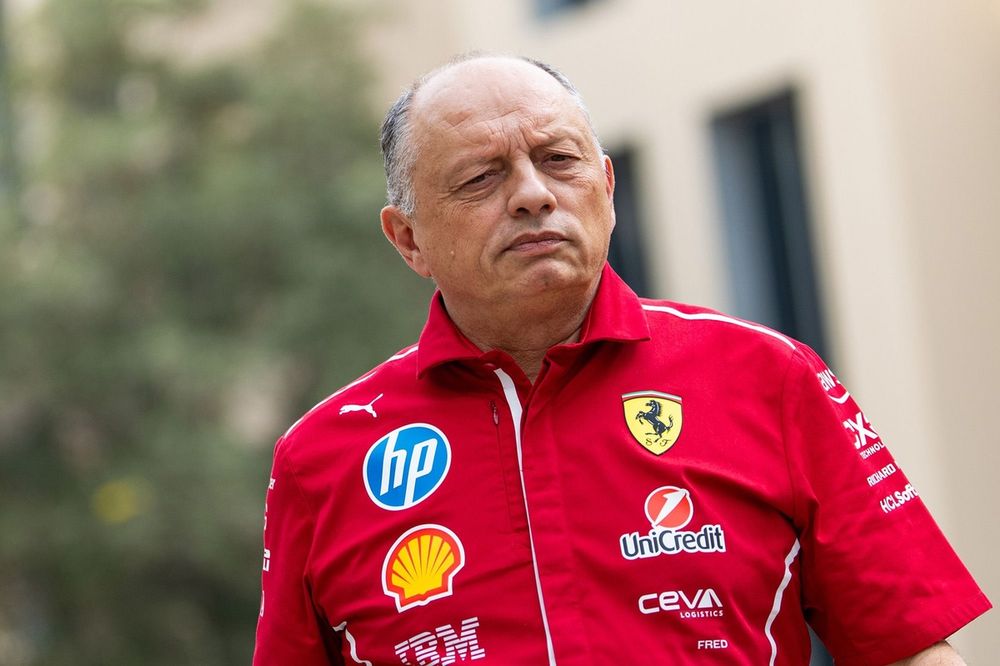
Ferrari team principal Frederic Vasseur warns that the 2026 Formula 1 season will require teams to be "clever" with their upgrade strategies, as the revised cost cap will make transporting new parts to far-flung races a major financial consideration. The early-season flyaway races, particularly in Australia, China, and Japan, could force teams to delay significant upgrades until they return to logistical hubs like Bahrain to avoid burning through their development budget on shipping alone.
Why it matters:
The 2026 technical revolution will likely create a wider performance gap between teams at the start of the season compared to the stable 2025 order. With the cost cap now including previously exempt expenses like transport and media activities, a team's financial strategy in shipping upgrades could become as critical as its technical development speed. This adds a new layer of strategic complexity beyond the wind tunnel and CFD work.
The details:
- Vasseur stated that the "driver of the introduction of upgrades" in 2026 will be the cost cap, not just a team's development capacity. Introducing a large component like a floor to a distant race could consume a disproportionate amount of the allocated budget.
- The revised 2026 cost cap is set at $215 million. While this appears higher than previous years, it now encompasses areas like transport costs and media activities that were previously excluded, meaning it does not represent a simple budget increase for pure car development.
- This financial pressure will incentivize teams to be strategic. Vasseur suggested it might be smarter to develop more in the simulator and wind tunnel and introduce major upgrades at races three or four, when the calendar returns to a region like the Middle East, rather than immediately shipping them to Asia.
- The logistical challenge is heightened by the 2026 calendar, which is expected to begin with a run of flyaway races, including a potential Australia-China double-header followed by Japan.
The big picture:
Vasseur draws a parallel to the 2022 season, predicting a "huge rate of development" throughout 2026, in contrast to the relatively static competitive order of 2025. He emphasizes that being fast at the beginning of 2026 does not guarantee a team will be at the front by the end of that season or into 2027. This underscores that the 2026 rules reset is a marathon, not a sprint, where long-term resource management will be key to sustained success.
What's next:
Teams are now forced to integrate complex logistical and financial calculus into their 2026 car development plans from the outset. The competitive hierarchy could see significant swings based on which teams best optimize their upgrade introduction schedule against the backdrop of the global calendar and the stringent cost cap. Ferrari and its rivals will need to master this new equation to succeed in the new era.
Original Article :https://www.motorsport.com/f1/news/why-ferrari-will-have-to-be-clever-with-2026-...