





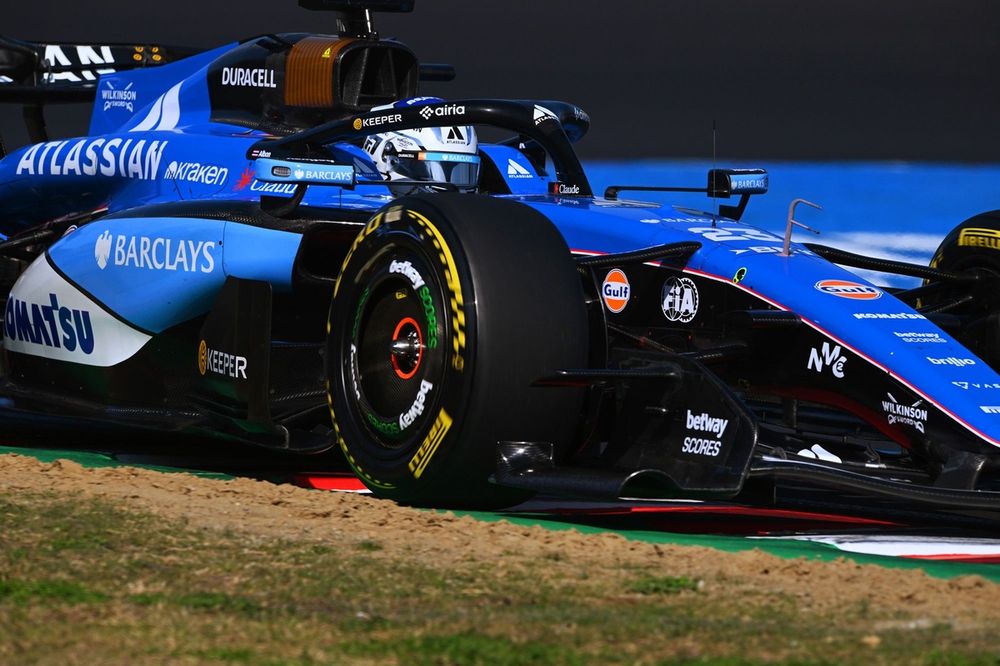
Williams uses Japanese GP for critical aerodynamic experiments with Albon's car
Williams conducted a series of unusual, rapid-fire aerodynamic experiments on Alex Albon's car during the closing stages of the Japanese Grand Prix, gathering crucial data to address the team's chronic lack of front-end grip. With a points finish out of reach, the team transformed the final laps into a live test session, making multiple front-wing adjustments to build a comprehensive performance map for analysis.
Why it matters:
For a team like Williams, which is battling a significant weight disadvantage and delayed development, maximizing track time for data collection is essential. These in-race experiments provide real-world validation for simulator models and help direct future development, especially during the upcoming forced break in the schedule. Every piece of correlated data could accelerate their path to solving the car's fundamental handling issues.
The details:
- With no points possible, Williams called Albon into the pits on lap 45, fitting new soft tires and altering the front-wing angle to begin the test sequence.
- The team then executed an extreme series of changes over the next few laps, repeatedly pitting the car to adjust the front wing.
- After just one lap on the new setup, Albon was called in again for a 4.5-click wing adjustment.
- This process was repeated over three subsequent laps, with adjustments sometimes exceeding four clicks at a time.
- During a final pit stop—the fifth in five laps—the team also switched back to medium compound tires.
- The goal was to push the setup to extreme and varied configurations, using onboard sensors to measure pressure and downforce across the aerodynamic surfaces. This data helps engineers understand how front-wing changes affect airflow over the entire car.
What's next:
The data harvested in Japan will be invaluable during the upcoming one-month break in the schedule, giving Williams engineers time to deeply analyze the correlation between track performance and their simulations.
- The team is working on a weight-reduction program for the heavy FW47, but immediate gains must come from aerodynamic understanding and setup optimization.
- Updates are scheduled for the Miami Grand Prix, and the insights from this experiment will directly influence both the car's development direction and its setup from the United States onward.
Original Article :https://www.motorsport.com/f1/news/f1-williams-experiments-they-turned-the-race-...