







The 'quirky' rule adding to early F1 2026 race start chaos
A previously overlooked energy regulation, combined with the already tricky turbo spool-up procedure, created a perfect storm of variables that led to wildly inconsistent race starts at the beginning of the 2026 Formula 1 season. While drivers and teams anticipated challenges with the new power unit launch protocol, an energy recharge limit applied to the formation lap caught many off guard, forcing compromises between battery charge and tire temperature before the lights even went out.
Why it matters:
Race starts are one of the most critical and visible moments in F1, offering immediate opportunities for position changes. The complexity introduced by these overlapping technical rules risks turning the start into a lottery based on energy management rather than pure driver skill and reaction time, undermining the sporting spectacle. Furthermore, it highlights how new regulations can have unintended consequences that only become apparent under real race conditions.
The details:
- The primary known challenge for 2026 was the requirement to spool the turbo for approximately 10 seconds before launch to hit the perfect RPM window without overcharging the battery, which led to the FIA adding a 5-second pre-start allowance to the procedure.
- A secondary, "quirky" rule exacerbated the problem: a maximum energy recharge allowance per lap, which also counts for the formation lap. In Australia, this was set at 8MJ.
- Formation Lap Conflict: Standard pre-race procedures like aggressive acceleration for tire warmth and heavy braking for brake temperature trigger energy deployment and harvesting. Drivers quickly hit the 8MJ ceiling during the out-lap, limiting their options.
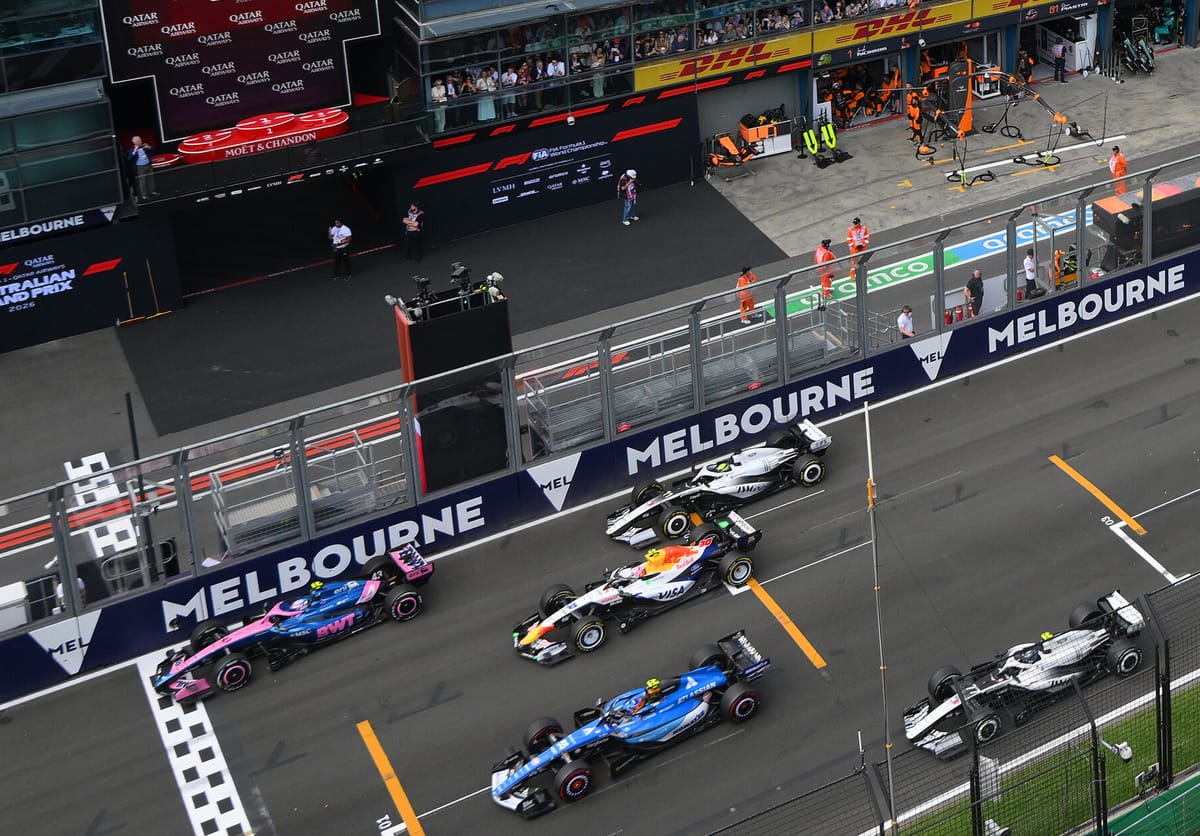
- Grid Position Disparity: Pole-sitter George Russell was disproportionately affected. Starting right at the timing line, his burnout energy usage counted immediately against his allowance. Drivers starting further back, behind the line, got a fresh 8MJ allowance as they crossed it for their burnouts.
- A Mandatory Drain: Regulations mandate battery deployment above a certain throttle threshold. With their recharge limit already maxed out, drivers who triggered this deployment on the formation lap could not recoup the energy, arriving on the grid with nearly empty batteries.
- This forced a critical compromise: preserve battery charge for the launch and have cold tires, or warm the tires aggressively and sacrifice essential electrical power for the start.
What's next:
While teams have discussed removing the formation lap from the recharge limit to simplify the process, a swift rule change is unlikely, with Ferrari among teams opposing rushed tweaks. However, the drama may not repeat to the same extent.
- Lessons Learned: Teams underwent a significant learning process in Melbourne and will arrive in China with better strategies to manage battery usage during the formation lap, even if it requires a calculated compromise.
- A Shanghai Solution: The Chinese Grand Prix presents a different layout. With a 190-meter offset between the start and timing lines, all cars will start behind the timing line. This eliminates the grid-position disadvantage faced by Russell in Australia, as every driver will get a fresh energy allowance as they cross the line to begin their formation lap procedures, creating a more level playing field.
Original Article :https://www.the-race.com/formula-1/the-quirky-rule-adding-to-early-f1-2026-race-...