










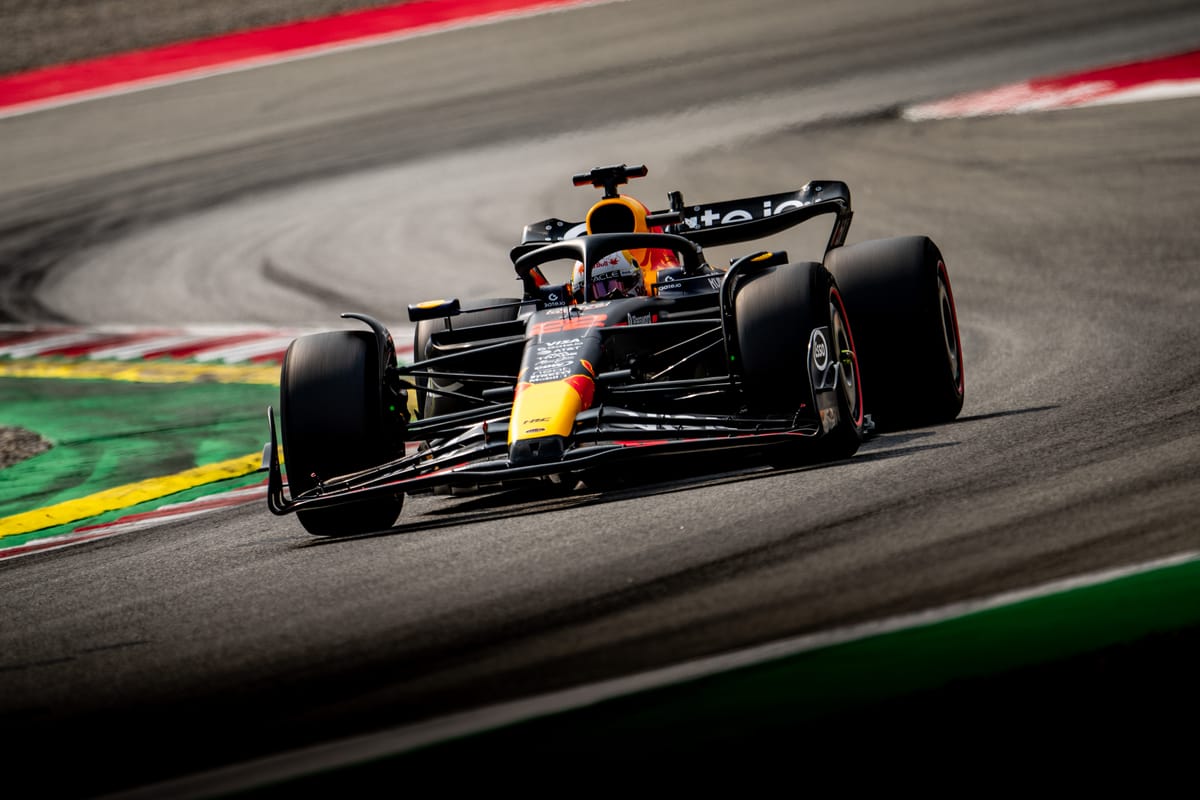
F1 Imposes 300km/h Speed Limit on 2026 Mule Car Test
Formula 1 teams will conduct Tuesday's Abu Dhabi tire test under artificial speed restrictions and expanded DRS zones to better simulate 2026 car dynamics. The session uses modified current-spec 'mule cars' with Monza-spec wings to approximate next-generation tire loads, though critical aerodynamic differences necessitate these unusual constraints to prevent dangerous handling characteristics.
Why it matters:
Without these limitations, the test would generate unusable or unsafe data. Current mule cars lack 2026's front active aerodynamics, creating dangerous front-rear load imbalances when DRS activates. The 300km/h speed cap and quadrupled DRS zones are essential compromises to gather reliable tire performance metrics ahead of Pirelli's December 15 homologation deadline for next year's compounds.
The details:
- Speed constraint: Mule cars face a strict 300km/h (186mph) straightline limit to balance axle loads. Without front active aero, DRS activation on current cars overloads front tires by maintaining high front downforce while reducing rear grip.
- Expanded DRS zones: Four activation zones replace the traditional two, including the start-finish straight and Turn 2-5 section. This mimics 2026's track-wide 'straightline mode' since true active front aero isn't feasible on test vehicles.
- Tire focus: Teams will validate Pirelli's C2-C5 compounds (excluding hardest C1) on both standard 2025 cars (driven by young drivers) and mule cars (driven by race drivers). Slightly narrower tires require minor chassis adaptations.
- Technical compromise: As Pirelli motorsport head Mario Isola explained, "We don't have active aero now... you release rear load but overload the front." The speed limit creates consistent, comparable data across 12 test sessions this year despite lap times being "not fully representative."
- Temperature risks: Uncontrolled speeds could cause extreme front tire cooling – exceeding 30°C drops seen in Baku – due to missing front active aero that would normally manage downforce in 2026 cars.
What's next:
The Abu Dhabi test concludes Pirelli's 2025 mule program spanning eight global circuits. While imperfect, these constrained sessions provide crucial validation for 2026's radical tire specifications. Teams will now analyze data to refine their own 2026 car simulations before final tire homologation.
- Pirelli gains its last opportunity to adjust compounds before freezing specifications for next season.
- Teams receive critical real-world validation to complement virtual modeling of 2026 vehicle dynamics.
- The December 15 deadline creates urgency, making this test vital for avoiding last-minute tire-related performance surprises in 2026.
Original Article :https://www.the-race.com/formula-1/speed-limit-for-f1-2026-mule-car-test-explain...