



Mercedes moves to mend fences with customer teams over power unit advantage
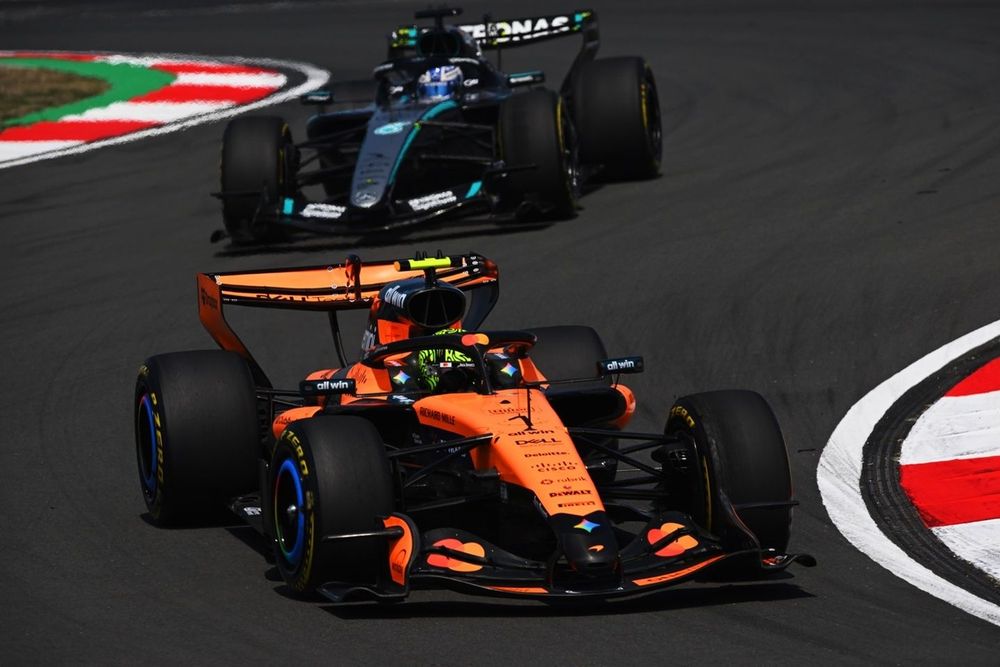
Mercedes has sought to defuse tensions with its customer teams after its dominant performance in Australia and China highlighted a significant performance gap, which rivals initially attributed to an information advantage on power unit usage. Team Principal Toto Wolff held a 'clear the air' meeting in Shanghai, leading to a noticeable shift in rhetoric from previously critical teams like McLaren, who now acknowledge the deficit is also down to their own car's aerodynamic performance.
Why it matters:
The dynamic between a works team and its customers is a delicate balance in Formula 1, governed by strict regulations on information sharing. Perceptions of an unfair advantage can poison crucial technical partnerships. Mercedes' swift action to address the issue head-on was necessary to maintain trust and collaboration with teams that are also its strategic partners on the grid, ensuring stability within its engine alliance.
The details:
- The friction began after the Australian GP, where Mercedes locked out the front row and finished well ahead of its customer teams—McLaren, Williams, and Alpine.
- Customer teams voiced frustration over a "knowledge gap," noting that only the works Mercedes team had the latest power unit specification during pre-season testing, which affected their simulation accuracy.
- McLaren Team Principal Andrea Stella stated discussions about receiving more information had been "going on for weeks," while Williams' James Vowles expressed being "shocked" by the margin of Mercedes' superiority.
- In response, Wolff convened a meeting in Shanghai to mollify concerns and reportedly secure an agreement to reduce public criticism on the matter.
- Following the meeting, McLaren's tone changed markedly. Driver Lando Norris suggested the team needed to "figure out for ourselves" and acknowledged Mercedes had simply been "cleverer."
- Data analysis supports Mercedes' claim that its advantage stems from a holistic car concept. The W17's efficient downforce and superior balance allow its drivers to use a more aggressive energy harvesting strategy on straights without compromising corner entry, a nuance its customers' cars currently cannot match.
What's next:
The immediate public airing of grievances appears to be over, with customer teams now focusing inward. For McLaren and Williams, the path forward involves a dual focus: deepening their understanding of the Mercedes power unit's operational envelope and, more critically, accelerating their own car development to add efficient downforce. The situation underscores a recurring F1 theme: while engine parity is regulated, translating that power into lap time is ultimately a team's own responsibility. Mercedes will need to continue its transparent collaboration to prevent the issue from resurfacing as development races intensify.
Original Article :https://www.motorsport.com/f1/news/peace-in-our-time-why-mercedes-is-playing-dow...