




McLaren making progress with Mercedes F1 power unit, but aero deficit remains
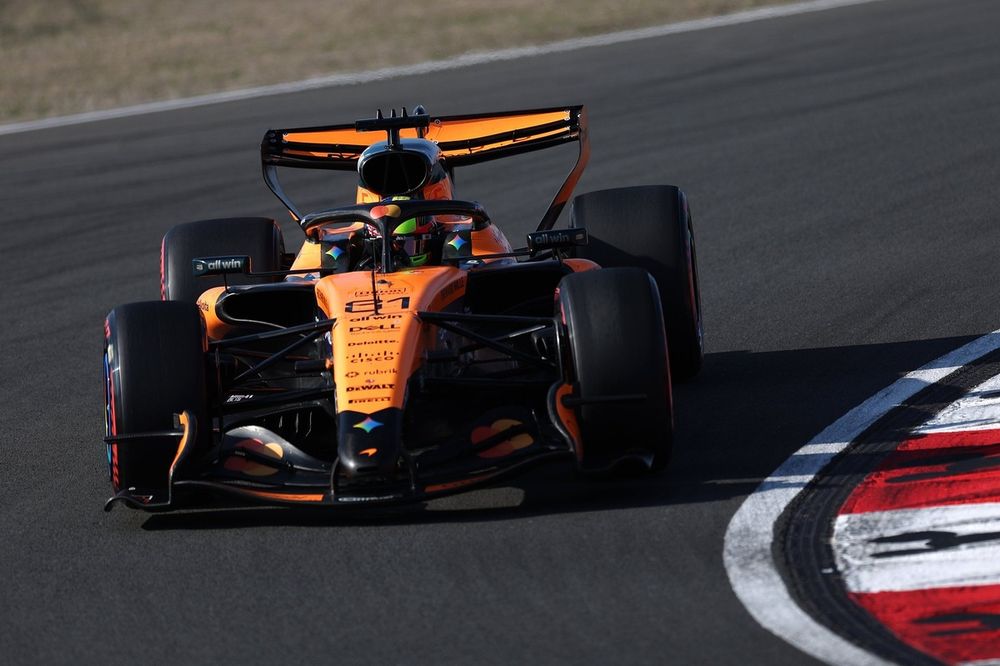
McLaren showed clear improvement in understanding its complex new Mercedes power unit during Chinese Grand Prix qualifying, but data reveals a persistent aerodynamic deficit to the works Mercedes and Ferrari teams. Team principal Andrea Stella confirmed the team has closed some of the initial performance gap in power unit deployment seen in Melbourne, but the MCL40 still lacks sufficient downforce and efficiency compared to its rivals.
Why it matters:
As a customer team, McLaren's ability to maximize its package against the works Mercedes squad is a critical benchmark for its 2026 competitiveness. Identifying that the primary performance gap is now aerodynamic, not just powertrain-related, directs the team's development focus and resources for upcoming upgrades. This honest assessment from Stella provides a clear roadmap for where McLaren must improve to consistently challenge for the front rows.
The details:
- Qualifying Result: In Shanghai, Oscar Piastri qualified fifth with Lando Norris sixth, both about half a second off pole position. This marked an improvement over Australia, where the team failed to optimize its package.
- GPS Data Insights: Analysis shows McLaren lost significant time to Mercedes and Ferrari through Shanghai's technical first-corner complex and other medium-to-high-speed corners like Turns 7-8 and Turn 16. This points directly to a car stability and downforce issue.
- Power Unit Progress: Stella stated that roughly 50% of the deficit to Mercedes in Australia was due to suboptimal power unit exploitation. In China, that portion of the gap has decreased as the team learns the complex Mercedes HPP system's "unique sensitivities."
- The Core Problem: The remaining deficit is now primarily aerodynamic. Stella explained, "the gap we have is pretty much similar to what we saw in Australia... This is related to not having enough aerodynamic load." He also noted the MCL40 is "relatively too draggy" for the downforce it produces.
- Customer Team Dynamic: Stella clarified there is no "dissatisfaction" with Mercedes, acknowledging it's natural for a works team to have an integration advantage. He praised HPP for its support but emphasized that mastering such a complex unit requires track time and learning.
What's next:
McLaren's path forward involves two parallel development streams. The positive is that more performance is still available from the power unit package simply through better understanding and setup, which should yield incremental gains at upcoming races.
The larger task is addressing the aerodynamic shortcomings. Stella indicated this will require a series of upgrades, the first of which are slated for introduction in May. Successfully improving the car's downforce and efficiency will be the key determinant in whether McLaren can consistently compete with Mercedes and Ferrari for podium positions throughout the 2026 season.
Original Article :https://www.motorsport.com/f1/news/mclaren-lacking-aerodynamic-load-and-efficien...