






Leclerc's China Sprint Qualifying Issue Highlights F1's New Power Unit Complexity
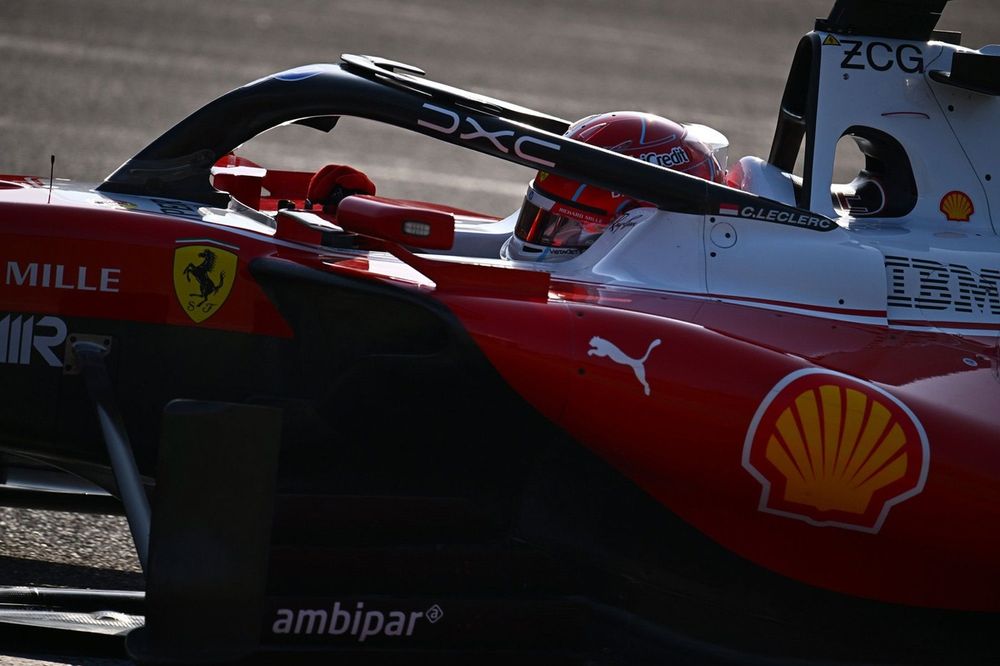
Charles Leclerc's final lap in Chinese Grand Prix sprint qualifying was derailed by a sudden loss of energy on the long back straight, costing him a shot at the second row. This incident underscores the extreme complexity of Formula 1's latest power units, where small changes in driving style or track conditions can trigger significant, real-time adjustments in energy management strategy.
Why it matters:
The 2026 power unit regulations have fundamentally changed the game, making energy management a dominant performance factor. Without the MGU-H and with a much more powerful MGU-K, teams and drivers are navigating a new, less predictable landscape. Leclerc's experience is a stark reminder that raw power is no longer enough; mastering the intricate dance of harvesting and deploying electrical energy is now critical for every single lap, especially in qualifying where margins are razor-thin.
The details:
- Leclerc's issue was not a mechanical failure but a consequence of how the car's complex systems reacted to his driving inputs across the lap. Similar hybrid management problems affected him in Australian GP qualifying, but a pit stop allowed for a reset—an option not available during his final SQ3 attempt in China.
- A comparison of his SQ3 laps reveals key differences. Between Turns 8 and 9, a critical energy-management zone, he used fourth gear in his first attempt but fifth gear in the second, resulting in a 15 kph higher cornering speed the second time.
- The power unit began cutting energy (entering a 'super clipping' recharge phase) much earlier on the run to Turn 11 during his first SQ3 lap. He also used a higher gear (seventh vs. sixth) in the second attempt, which contributed to a 17 kph speed difference.
- These earlier choices meant the system had less energy in reserve for the crucial 1.2km back straight. In his compromised first attempt, he reached a peak speed 9 kph lower than in his second run and hit that peak later, indicating depleted energy.
- Data shows Leclerc experimented with energy management more than other frontrunners between sessions. His engineer confirmed that two-tenths of his six-tenths deficit to Lewis Hamilton in Sector 2 came specifically from the Turn 8 complex, highlighting the direct lap time cost.
What's next:
As teams gather more data, their predictive models for these complex power units will improve. However, sprint weekends—with their limited practice time—will remain a high-wire act, amplifying the risk of unpredictable energy management scenarios. For drivers like Leclerc, the learning curve involves not just extracting maximum performance but also understanding how their every input shapes the car's energy strategy for the corners and straights that follow. This technical layer adds a new, cerebral challenge to the pursuit of a perfect qualifying lap.
Original Article :https://www.motorsport.com/f1/news/how-charles-leclercs-chinese-gp-sprint-qualif...