



Honda and Aston Martin Identify Turbo Lag as Key to Singapore Struggle
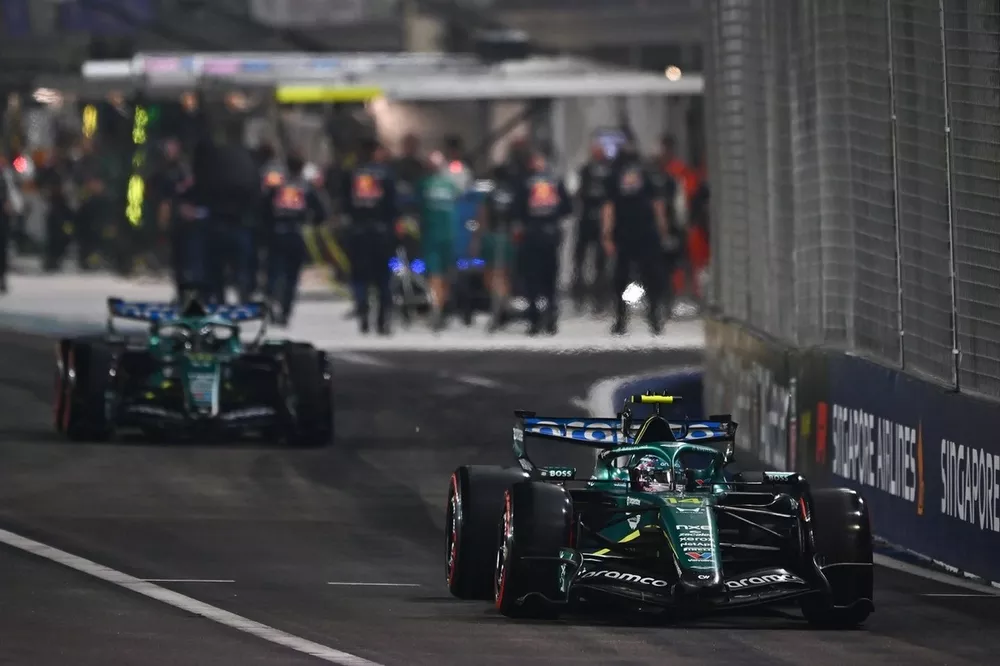
Aston Martin’s disappointing performance at the Marina Bay Street Circuit has been traced back to persistent turbo lag within the Honda power unit. Despite a hardware update introduced in Madrid, the unique characteristics of the Singapore circuit exposed a critical flaw in how the AMR26 handles energy-rich environments.
Why it matters:
Driveability is a decisive performance metric that simulations often fail to capture accurately. For Aston Martin, the inability to maintain stable acceleration directly undermines the car's potential, proving that hardware upgrades are insufficient without precise software calibration to match specific track profiles.
The details:
- Root Cause: Honda confirmed that turbo lag resurfaced in Singapore due to the track's layout and the energy-rich nature of the circuit, leading to unstable acceleration for the driver.
- The MGU-K Conflict: In energy-rich scenarios, MGU-K harvesting becomes less efficient. This prevents the engine from maintaining the high operation points required during off-throttle sections to mitigate lag.
- Hardware vs. Software: Deep-dive investigations at the Sakura facility revealed no specific hardware faults. Consequently, Honda is developing countermeasures focused on software and operational settings rather than physical components.
- Simulation Gap: Chief Trackside Officer Mike Krack acknowledged that these specific driveability nuances—particularly the interaction between the MGU-K and turbo lag—cannot be fully replicated in virtual simulations.
The big picture:
Beyond the technical failure, Aston Martin is managing the "emotional dynamics" of the season. A successful outing in Malaysia inflated expectations for Singapore beyond realistic levels, creating a psychological setback when the car underperformed. This combination of technical volatility and mismanaged expectations highlights the fragility of the team's current momentum in the 2026 campaign.
What's next:
The focus now shifts to the upcoming race in Austin. Honda will implement new software control measures to better meet driver demands for linear power delivery. The team's success will depend on whether these settings can stabilize the power unit across varying energy profiles without sacrificing raw performance.
Original Article :https://www.motorsport.com/f1/news/the-unexpected-problem-honda-encountered-desp...