




Gary Anderson questions Ferrari's exploitation of F1's grey areas in Miami
Ferrari introduced a significant package of aerodynamic upgrades at the Miami Grand Prix, but technical expert Gary Anderson argues several components appear to push the boundaries of the regulations' intent. He suggests the FIA should act to limit the exploitation of such grey areas to preserve the sport's goal of improving wheel-to-wheel racing, which he believes is currently a low priority for design teams focused solely on performance.
Why it matters:
The core intention of F1's current technical regulations is to facilitate closer racing. When teams find and aggressively exploit loopholes or vague wording, it can undermine that objective by creating performance differentiators that are difficult for rivals to match. Anderson's analysis highlights a growing tension between prescriptive rulebooks and the relentless innovation of team engineers, raising questions about whether the governing body needs to be more proactive in policing the spirit, not just the letter, of the law.
The Details:
Anderson pinpointed several specific developments on the SF-24 that he finds questionable:
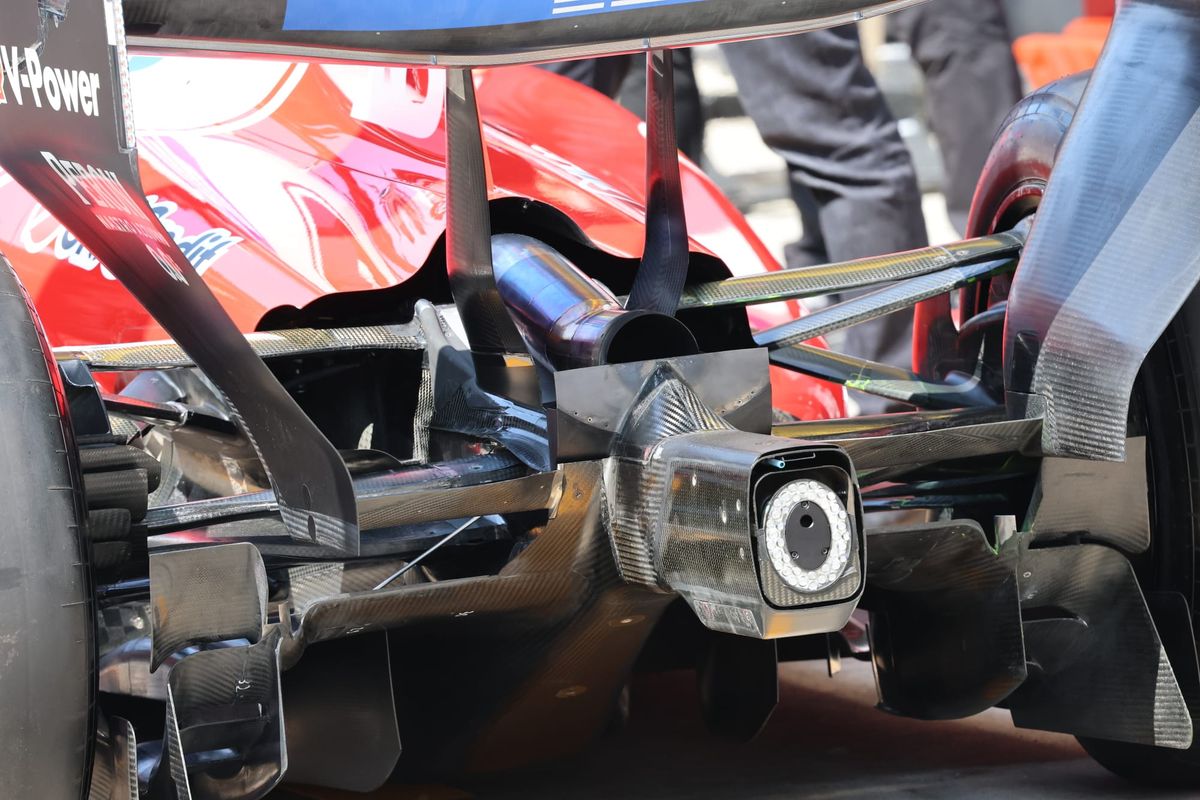
- Exhaust Outlet Blanking Vane: A new turning vane partially obscures the exhaust outlet. Anderson theorizes this creates beneficial back pressure at high engine RPM, improving throttle response by helping manage the smaller turbocharger. He contends this may contravene regulations stating the exhaust must "remain unobstructed," suggesting a simple clarification that the outlet must be fully visible from behind the car would resolve the ambiguity.
- Revised Front Splitter: A new, more central splitter under the front crash structure appears designed to manage transverse airflow during cornering, working in concert with other vanes to stabilize and improve diffuser performance.
- Multi-Element Vertical Vanes: The redesigned bargeboard area features complex vertical vanes that, contrary to the regulation's intent to induce 'in-wash,' seem engineered to push airflow outward around the car, enhancing underfloor performance.
- Rear Wing & Diffuser Tweaks: Structural changes to the rear wing mounts aim to improve stability when the active aerodynamics are deployed. Minor tweaks were also noted around the diffuser's 'mouse hole' openings and floor edge vanes, likely for local airflow optimization.
What's next:
Anderson, a former designer himself, acknowledges the ingenuity but warns the sport's rulemakers. He argues that with a 264-page rulebook, there should be fewer ambiguities left for teams to exploit. If the FIA determines the regulatory intent is being undermined, it may need to issue clarifications or technical directives to close these loopholes. However, as history shows, such interventions often spark a new cycle of innovation elsewhere, in the endless cat-and-mouse game between F1's engineers and its regulators.
Original Article :https://www.the-race.com/formula-1/gary-anderson-on-grey-area-ferrari-is-exploit...