




Gary Anderson explains why F1 race starts are about to get more complicated
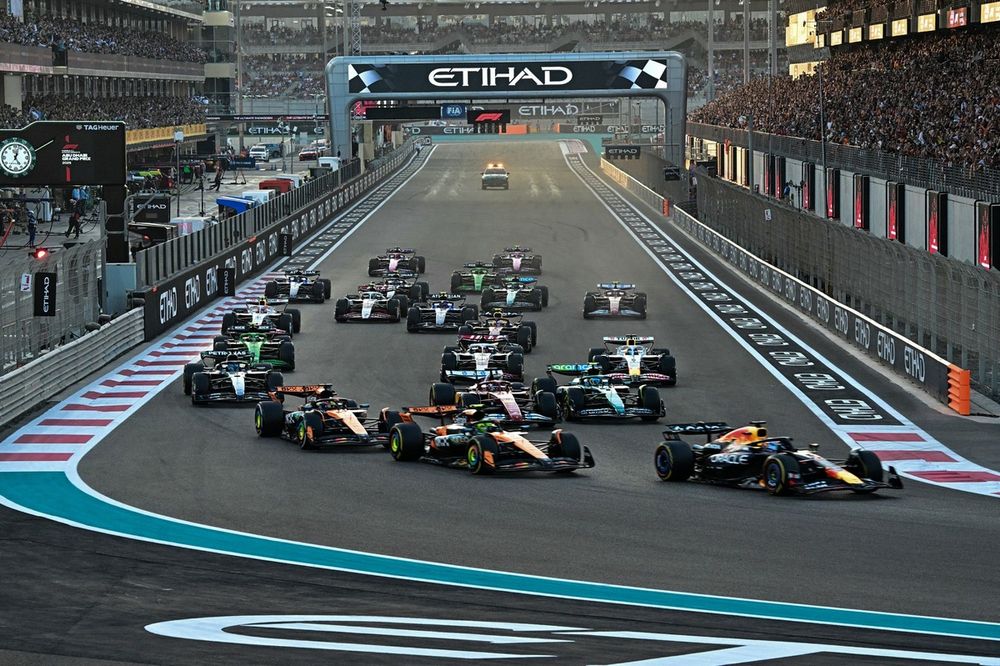
The removal of the MGU-H for the 2026 Formula 1 season will fundamentally change how drivers execute race starts, introducing new variables of turbo lag and clutch management that will increase pressure on the grid. Without the electrical motor to spool the turbo, teams must rely solely on exhaust gas, creating a delicate and time-sensitive balancing act between engine RPM, throttle position, and clutch engagement to avoid wheelspin or anti-stall.
Why it matters:
Race starts are one of the most critical and visible moments in F1, offering immediate opportunities for position changes. Introducing greater complexity and unpredictability into this phase could widen the performance gap between teams and drivers, making launch consistency a new and crucial competitive battleground. A poor start under the new rules could be far more costly and difficult to recover from.
The details:
- The core change is the deletion of the MGU-H (Motor Generator Unit – Heat), which previously used electrical energy to spin the turbocharger up to speed almost instantly.
- For 2026, turbos must be spooled using exhaust gas volume alone, which requires a reasonably high and stable engine RPM. Achieving this stable state will take precious extra seconds on the grid.
- The Critical Sequence: Drivers will need to reduce throttle position as the starting lights sequence begins to manage torque at the moment of clutch release. The key skill will be deciding which light to back off on to be in the perfect RPM window.
- The Turbo Lag Trade-Off: The chosen turbo size creates a strategic compromise. A smaller turbo spools faster, ideal for starts and tight circuits like Monaco, but hurts top-end power on speed-focused tracks like Monza. Manufacturers will use vast simulation data to find their optimal design.
- The Two-Stage Launch: After a successful initial launch with minimal wheelspin, drivers will get full ICE torque. A second power boost then arrives only after reaching 50 km/h (31 mph), when the electrical energy from the MGU-K can be deployed.
The big picture:
This technical shift brings the classic challenge of turbo lag back to the forefront of F1. It's a mechanical problem with a theoretical electrical solution—adding a dedicated motor to the turbo—but such a system is deemed too complex even for F1's current regulations. Consequently, the art of the race start is set to become a more pronounced differentiator, placing a premium on driver skill, team procedure, and precise calibration from the power unit manufacturer. How quickly teams adapt and perfect their start protocols could shape early-season fortunes in 2026.
Original Article :https://www.the-race.com/formula-1/gary-anderson-why-f1-2026-starts-much-more-co...