





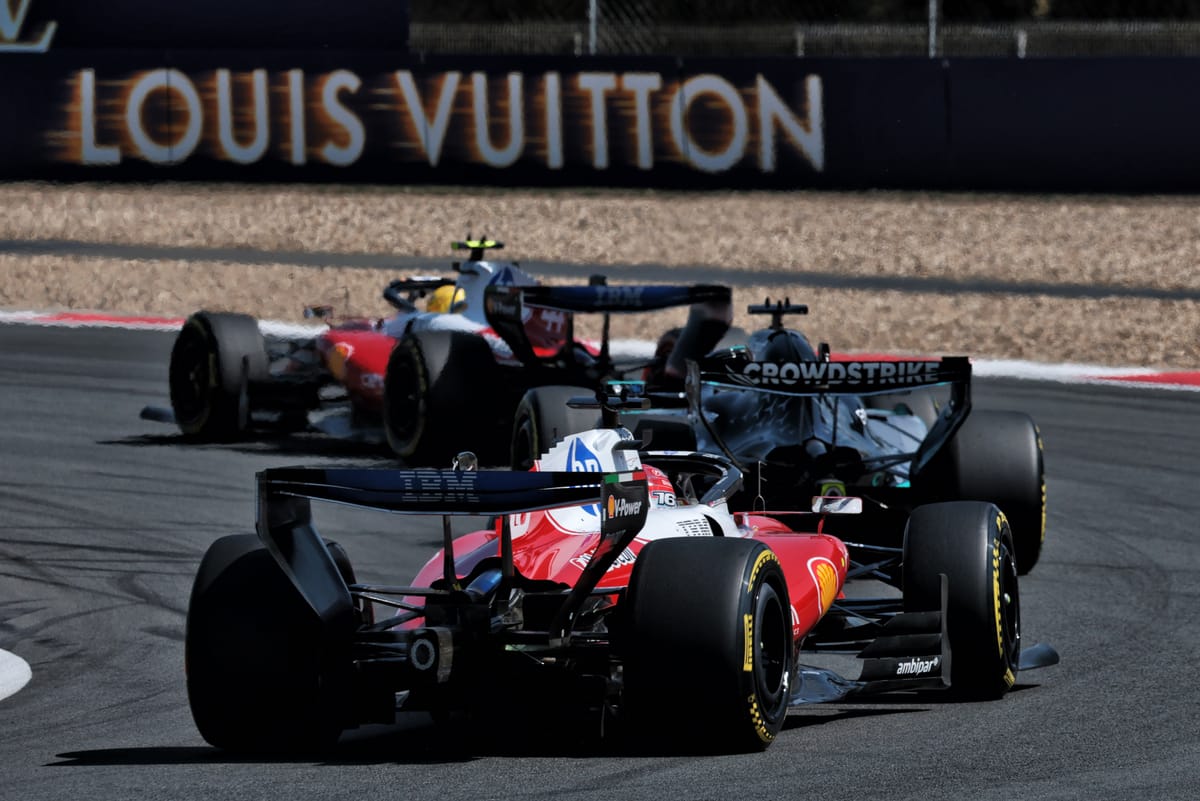
Ferrari suspects Mercedes is holding back engine power in strategic F1 regulatory game
Ferrari believes Mercedes is deliberately hiding a portion of its 2026 power unit's true performance to keep the Scuderia from qualifying for crucial mid-season engine upgrades, according to a detailed technical and political analysis. The opening races have confirmed Mercedes holds a clear advantage, particularly in electrical deployment, but the strategic battle now centers on the FIA's new performance-evaluation system and the upgrade tokens it unlocks.
Why it matters:
This isn't just about on-track speed; it's a high-stakes regulatory chess match that could define the development race for the entire 2026 season and beyond. If Ferrari's suspicions are correct, Mercedes is strategically managing its performance to deny rivals a chance to close the gap through sanctioned upgrades, potentially locking in a long-term advantage. The outcome will test the effectiveness of the FIA's new rules designed to promote competition.
The Details:
- The Upgrade Mechanism: The FIA measures each power unit's performance against the current benchmark (Mercedes) using a confidential index. Manufacturers falling 2-4% behind qualify for one in-season upgrade and one for 2027; those 4% or more behind get two upgrades in each period.
- Ferrari's Position & Suspicion: Ferrari estimates its power unit is at least 15bhp down on Mercedes, which would place it squarely in the upgrade-eligible zone. Maranello suspects Mercedes is "holding back" peak performance to keep Ferrari's deficit just below the 2% threshold, thus blocking its upgrade path.
- FIA's Oversight Tools: The regulations are designed to prevent such "sandbagging." The FIA uses its own tools for measurement, can verify data via factory simulations, and has the discretion to revoke upgrade slots if manipulation is suspected. Data from all four Mercedes-powered teams also provides a broad sample.
- Mercedes' Possible Justification: An alternative theory is that Mercedes may be managing its power unit conservatively due to lingering reliability concerns, rather than for pure strategic gain.
- Ferrari's Chassis Edge: Despite the power deficit, analysis suggests the Ferrari SF-26 may be the aerodynamically superior car, with its chassis potentially around 1% better than the Mercedes W17. This highlights that the engine is the primary performance differentiator.
What's next:
The first official performance evaluation checkpoint, originally set for after Miami, is now under discussion due to cancelled early races. Ferrari is preparing a new internal combustion engine specification and will conduct a filming day at high-speed Monza next month to gather critical energy management data.
If Ferrari secures upgrade eligibility, it can fast-track development of its new engine and test components on track late in the 2026 season, setting the stage for a stronger 2027 title challenge. For now, the team views 2026 as a transitional year where beating Mercedes on pure pace will be difficult on most circuits, making the upgrade battle a critical strategic objective.
Original Article :https://www.the-race.com/formula-1/does-ferrari-think-mercedes-hiding-something-...
