




F1's New Era Divides Paddock: Hamilton's Joy vs. Verstappen's Criticism
The 2024 Formula 1 technical regulations have created a stark divide in the paddock after the first two race weekends, with Lewis Hamilton praising the new racing style as the best he's experienced while rivals like Max Verstappen and Fernando Alonso remain highly critical. The FIA is proceeding with a planned evaluation after the Chinese Grand Prix, but a growing consensus suggests no immediate rule changes are likely before the Japanese Grand Prix, with teams urging against a 'knee-jerk reaction'.
Why it matters:
How the sport's stakeholders evaluate and potentially adjust these new rules will set the competitive and entertainment direction for the foreseeable future. The split in driver opinion highlights a fundamental debate about the essence of modern F1 racing—whether the priority is pure driver skill and flat-out racing or creating close, tactical battles for fans.
The details:
- Polarized Driver Reactions: Lewis Hamilton, after his first Ferrari podium in Shanghai, described the racing as "the best... I’ve ever experienced," likening it to exciting go-kart battles. In stark contrast, Red Bull's Max Verstappen called it "terrible" and akin to "Mario Kart," and Aston Martin's Fernando Alonso criticized it as a "battle of the batteries."
- Evaluation Proceeds, But Calmly: The FIA's planned post-China evaluation with teams will go ahead as part of an "ongoing dialogue." However, the initial panic after Melbourne has subsided, with many teams and F1 CEO Stefano Domenicali believing the overall product is entertaining for fans, based on live reactions and social media data.
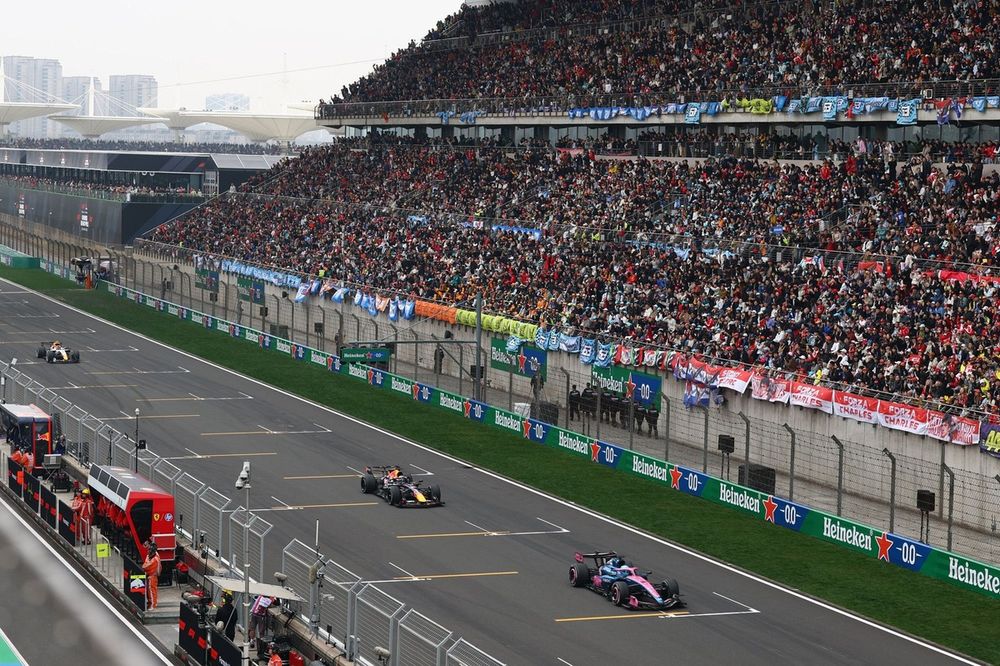
- Circuit Variation Offers Perspective: The different track layouts between Melbourne and Shanghai provided crucial data. China's circuit allowed for easier energy recovery, reducing the extreme "lift and coast" tactics seen in Australia and suggesting the issue may be circuit-specific rather than a fundamental flaw.
- Potential Adjustment Levers: Williams Team Principal James Vowles indicated four or five regulatory options are being considered, primarily related to energy deployment and harvesting. These could include increasing the full power deployment limit or reducing the share of electric power in race trim, though the latter is seen by some as too extreme.
- Underlying Politics: Mercedes Team Principal Toto Wolff hinted that calls for change could be politically motivated to curb his team's early competitive advantage, stating, "Let's see what kind of political knives are going to come out."
What's next:
The logical break after the upcoming Japanese Grand Prix provides the ideal window for a thorough assessment. The FIA and teams will use the data from Suzuka—a classic, flowing circuit—to form a complete picture before the season resumes in Miami in early May.
- Any substantive regulation tweaks are now expected to be discussed and potentially implemented after Japan, not before.
- The focus will be on refining specific aspects, like qualifying energy management, without overhauling the core regulations, aiming to balance sporting purity with the spectacle of close racing.
Original Article :https://www.motorsport.com/f1/news/no-f1-rule-changes-ahead-of-japan-but-wolff-r...