


F1's Most Dramatic Team Boss Changes
Formula 1 history is punctuated by sudden, high-stakes changes in team leadership, where pivotal decisions have led to fairytale successes, spectacular failures, and enduring instability. From Ross Brawn's legendary buyout to Alpine's revolving door and Christian Horner's dramatic exit, the role of team principal remains one of the sport's most volatile and consequential positions.
Why it matters:
The team principal is the central figure responsible for technical direction, operational execution, and team culture. A successful change can catalyze a championship, as Brawn GP proved, while instability often condemns a team to the midfield. These stories underscore how leadership, corporate politics, and pure timing are as critical to success as aerodynamic downforce or engine power.
The Details:
- Ross Brawn's Masterstroke (2007-2009): After leaving Ferrari, Brawn joined a struggling Honda team, identifying a critical disconnect between its UK chassis and Japan engine divisions. His plan for a three-year turnaround was upended when Honda withdrew during the 2008 financial crisis. Brawn bought the team for £1 and, with the pre-developed 2009 car, won both championships a year ahead of his own schedule.
- Alpine's Era of Instability (2021-2026): Renault's rebranded works team became a case study in management chaos. Under CEO Luca de Meo, it cycled through multiple leadership structures involving Laurent Rossi, Otmar Szafnauer, Bruno Famin, and Oliver Oakes in quick succession. A publicly stated "100-race plan" failed to yield a win, and the team's direction was further complicated by the departure of icon Alain Prost and the eventual return of Flavio Briatore.
- The End of an Era at Red Bull (2025): Christian Horner's two-decade reign, which yielded eight drivers' titles, ended following a prolonged power struggle after the death of founder Dietrich Mateschitz. Despite being cleared in an internal investigation earlier in 2024, Horner gradually lost the support of key figures including Helmut Marko and the Yoovidhya family, leading to his shock departure.
- Other Notable Upheavals:
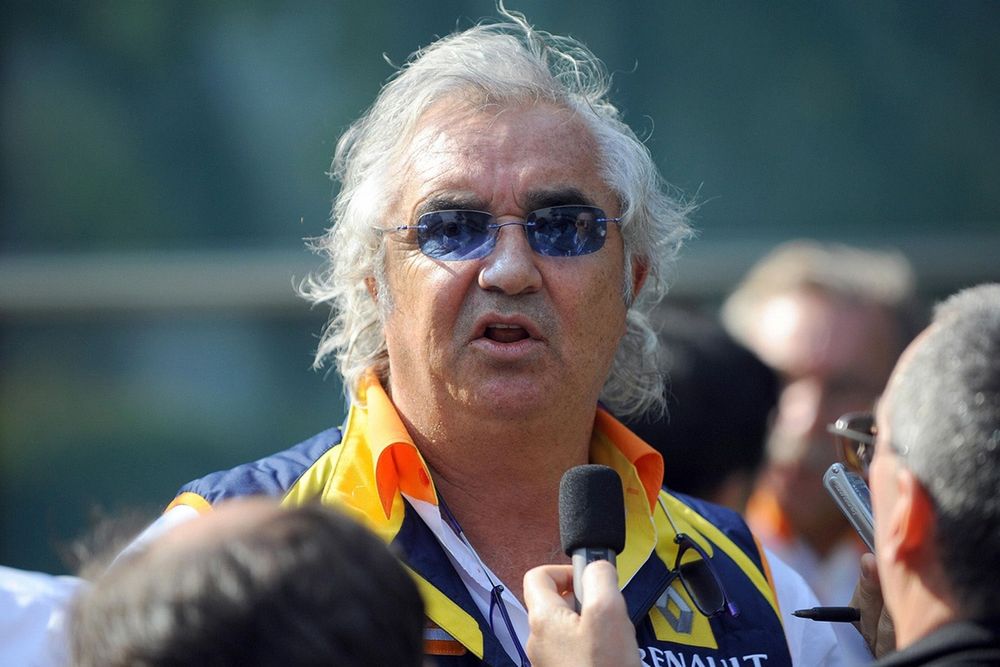
- Renault's 'Crashgate' (2009): Flavio Briatore was forced out and initially banned from FIA events after the race-fixing scandal in Singapore, ending his long tenure at the Enstone team.
- Ferrari's Short Experiment (2014): Lacking F1 experience, Ferrari North America CEO Marco Mattiacci replaced Stefano Domenicali but lasted only seven months before Maurizio Arrivabene took over.
- Caterham's Collapse (2014): The backmarker team saw a janitor improbably promoted to a "director" role before entering administration, with a restructuring specialist, Finbarr O'Connell, serving as its final team principal for a crowdfunded finale in Abu Dhabi.
- McLaren's Power Struggle (2016): Legendary figure Ron Dennis was ousted after a failed attempt to regain full control of the McLaren Group, paving the way for Zak Brown's eventual takeover.
- Aston Martin's Swift Pivot (2026): Adrian Newey's move into the team principal role was short-lived. With the new Honda power unit plagued by severe reliability issues, Aston Martin is already set to replace him with Jonathan Wheatley, making Newey the fourth boss in five years for the team.
The Big Picture:
These episodes reveal the immense pressure on team principals, who sit at the intersection of sporting ambition, technical complexity, and corporate finance. Stability at the top has consistently correlated with long-term success—exemplified by Horner's earlier reign at Red Bull or Toto Wolff's at Mercedes—while constant change, as seen at Alpine, almost guarantees underperformance. The role demands not just racing acumen but also supreme political skill to navigate the interests of drivers, engineers, and corporate owners.
Original Article :https://www.motorsport.com/f1/news/eight-shock-formula-1-team-principal-changes/...