


Brundle Demands FIA Action After Norris' Uncontrolled Overtake
Sky Sports pundit Martin Brundle has issued a stark warning to the FIA, calling for immediate regulatory changes after Lando Norris revealed his car executed an overtake on Lewis Hamilton without his direct input due to unpredictable battery deployment. Brundle emphasized that the fundamental link between driver throttle demand and power unit response must be restored, labeling the current situation as a critical flaw in the 2026 technical regulations that cannot be ignored.
Why it matters:
This incident strikes at the core of Formula 1's sporting regulations and driver safety. The principle that a driver must be in full control of their car at all times is sacrosanct. When power delivery becomes unpredictable or automated, it not only compromises the sporting integrity of wheel-to-wheel combat but also introduces a significant safety variable, as drivers cannot anticipate the car's behavior under acceleration or while defending. The FIA faces mounting pressure to address this before a more serious incident occurs.
The details:
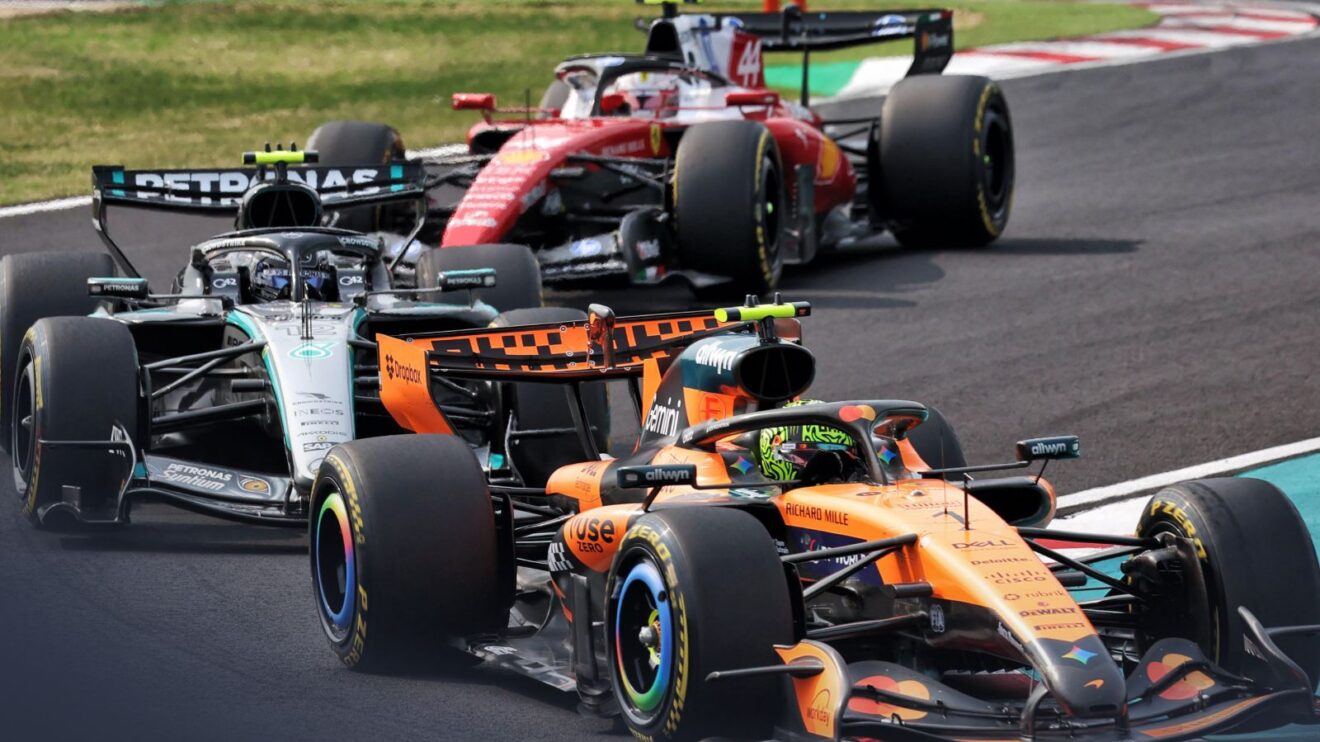
- The controversy stems from comments made by McLaren's Lando Norris after the Japanese Grand Prix, where he stated his car overtook Lewis Hamilton's Ferrari on its own accord. Norris explained, "I didn’t even want to overtake Lewis... I don’t want it to deploy, but I can’t control it. So I overtake him, and then I have no battery, so he just flies past."
- Martin Brundle highlighted this as his primary concern, more so than the high-speed crash for Haas's Oliver Bearman that initially sparked driver debates. Brundle pointed to the long-standing regulation that "the driver must drive the car alone and unaided," arguing that unpredictable, self-deploying battery power violates this rule.
- A Fundamental Flaw: Brundle stressed that power delivery "must be proportional to what the driver is doing with the throttle. That’s a fundamental. It has to be linear." The current hardware and energy management rules are creating a situation where drivers are caught between a rock and a hard place, with aggressive harvesting and deployment cycles.
- Safety Priorities: While driver safety is paramount, Brundle outlined a hierarchy of concern, placing fans, marshals, and pit crews ahead of drivers in terms of who assumes the most involuntary risk, underscoring the broad responsibility of the FIA to protect all stakeholders.
What's next:
The FIA has already announced it will hold evaluation meetings throughout April to review the 2026 regulations. Brundle asserts that with driver complaints now public and likely formalized through the Grand Prix Drivers' Association (GPDA), the governing body "will have to make a change for Miami." The challenge is technical; the 2026 power units generate significantly more electrical energy but deplete quickly, creating the volatile deployment cycles. While a complete hardware fix is impossible mid-season, the FIA is expected to work on software and regulatory adjustments to "smooth out" the power delivery and restore predictable, driver-controlled performance before the next race.
Original Article :https://www.planetf1.com/news/f1-2026-rules-martin-brundle-fia-fix-lando-norris-...