





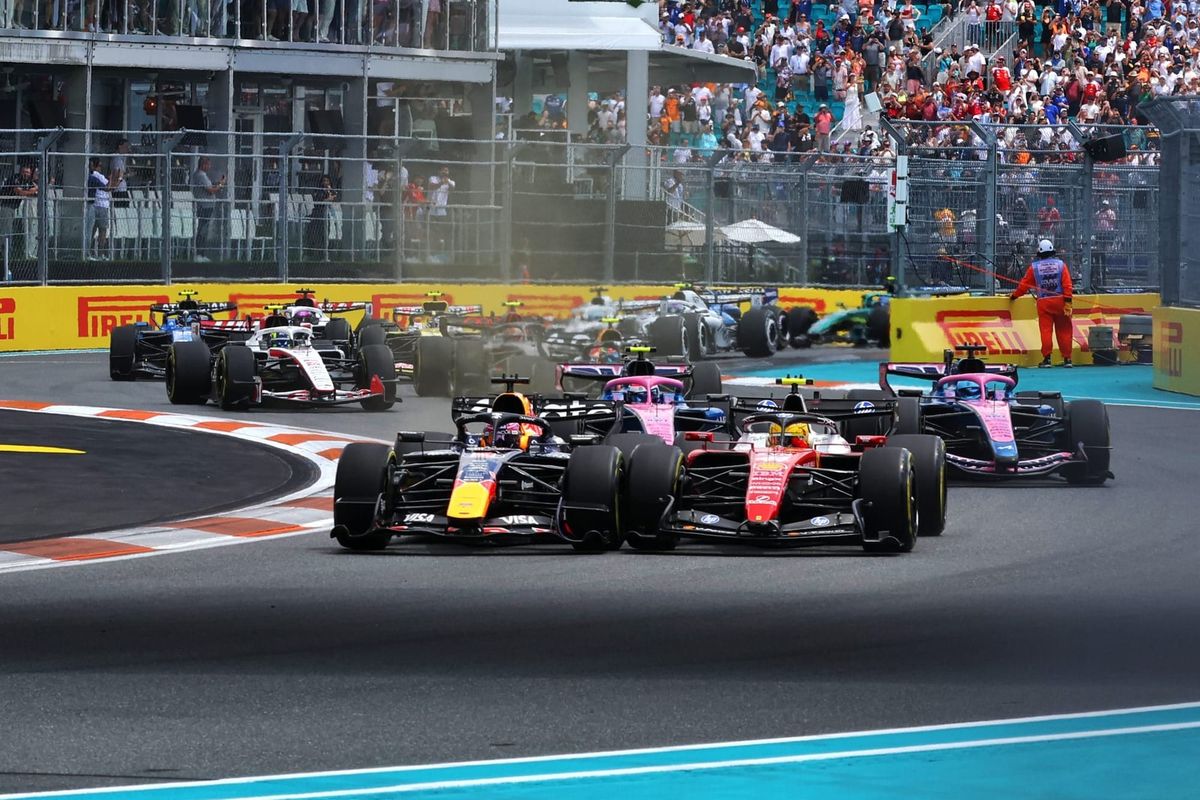
A 'delightful move'? Our verdict on F1's big 2027 engine shift
Formula 1 has agreed in principle to fast-track fundamental changes to its engine regulations for 2027, effectively scrapping the controversial 50/50 power split between the internal combustion engine and electrical output. The decision comes only four rounds into the 2026 season, following widespread criticism of the new formula's on-track product.
Why it matters:
This is a stunning admission that the much-vaunted 2026 engine concept doesn't work. It contradicts F1 CEO Stefano Domenicali's recent claims that “F1 has not any problems” and that most fans like the new style of racing. The about-face highlights both the sport's ability to adapt – and its failure to anticipate obvious flaws flagged by drivers and engineers months ago.
The details:
- The key change is dropping the notional 50/50 power split, which forced drivers into energy management at the expense of racing.
- Battery capacity may be increased to give drivers more deployment freedom, subject to final agreement and timing.
- The decision was made after data from early races confirmed the power unit concept was fundamentally limited by physics – no amount of minor tweaks could fix it.
- Max Verstappen's early-season complaints about the “artificial” driving style proved prescient, though initially dismissed as petulance.
- Some stakeholders pushed for change behind the scenes, with manufacturers reportedly accepting the need for a redesign despite their investment.
The big picture:
F1's journalists are divided. Some praise the swift action: “a victory for sense over hyperbole” and “impressive… action taken so quickly.” Others condemn the spin: “it makes F1 and Domenicali look a bit silly” after weeks of denying problems. The episode risks eroding fan trust, especially when fans who complained were told to “stop living in the past.” Still, the ability to course-correct mid-season is rare in sport and reflects F1's data-driven, pragmatic DNA.
What's next:
The 2027 changes won't be perfect, but they represent a far bigger step in the right direction than the minor tweaks introduced in Miami. If finalized, they should reduce the energy starvation and “super-clipping” that have plagued early 2026 races. The real lesson is for F1's rule-making process: sleepingwalk into flawed regulations, then unpick them within months, is no way to build a future.
Original Article :https://www.the-race.com/formula-1/a-delightful-move-our-verdict-on-f1s-big-2027...