








McLaren's subtle front wing changes reveal F1 flexi-wing rule impact
The first images of McLaren's revised front wing, designed to comply with Formula 1's stricter flexi-wing regulations, reveal the intricate details teams must address.
This weekend's Spanish Grand Prix marks the debut of new FIA tests aimed at curbing excessive aeroelasticity. Under these new rules, the allowable deflection under a 1000N force is reduced from 15mm to 10mm (applied to both sides) and from 20mm to 15mm (applied to one side).
A further test on the front wing flap limits deflection to 3mm, down from the previous 5mm, when a 60N load is applied.
While speculation suggested these changes could significantly alter the competitive order, the actual modifications to the wings might not be visually dramatic. Emerging images of new front wings indicate that teams are focusing on accessory components rather than redesigning the main wing flaps.
Moreover, many of the crucial changes are internal, involving strengthened carbon fibre to enhance robustness and reduce flexing at speed, making them invisible to the eye.
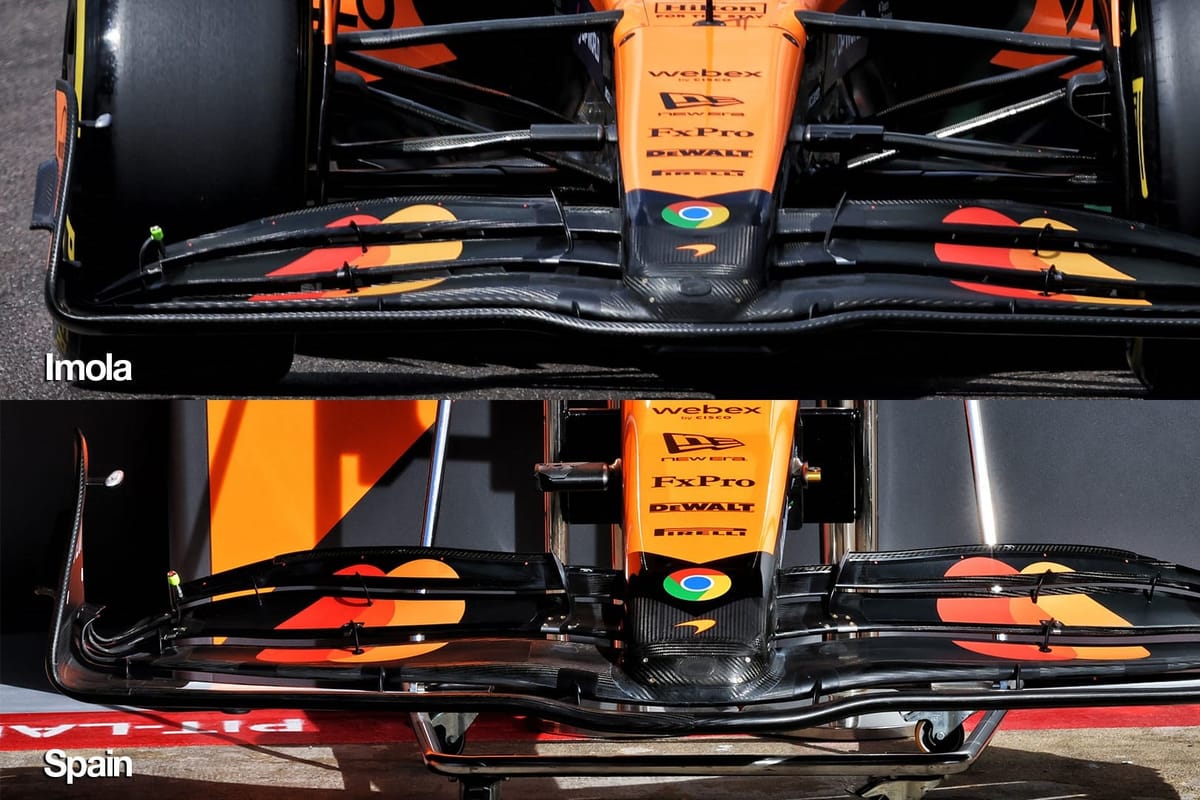
As the comparison image of McLaren's Spanish GP design versus its Imola configuration shows, the wings appear nearly identical at first glance. However, a notable modification is the addition of an extra support stay between the top two wing elements, highlighted in green. This provides additional support to the upper flap, reducing its tendency to flex backward under load.
The precise impact of these front wing revisions on the competitive hierarchy remains uncertain. Some teams anticipate minimal effect on the existing order, while others believe a significant reshuffle is possible.
Ferrari team principal Fred Vasseur commented at Monaco: "We have been working on this for a long time. This could be a game-changer for everyone because we don't know the impact of the new regulations on each team. We will focus on this to better exploit the front wing."
A key challenge posed by these wing modifications is the increased difficulty in adjusting the balance for compromises between low-speed understeer and high-speed oversteer, which are characteristic of current ground-effect F1 cars.
Original Article :https://www.the-race.com/formula-1/what-first-look-at-mclaren-tells-us-about-f1-...
