



The Short-Lived Adjustable Front Wing: Why F1's 2009 Experiment Failed
As Formula 1 prepares for active aerodynamics in 2026, it's revisiting a concept from its past: driver-adjustable front wings. The system was briefly legal in 2009 and 2010, born from a collaborative effort to improve overtaking. However, it failed to achieve its primary objective and was ultimately used for a different purpose before being scrapped in favor of a more effective solution.
Why it matters:
The story of the adjustable front wing is a crucial lesson in the complexities of F1 rule-making and the immense challenge of combating 'dirty air'. It shows how even well-intentioned, collaborative technical solutions can have unintended consequences. Understanding this past failure provides essential context for evaluating the ambitious and technologically advanced 2026 regulations, reminding us that progress in F1 is often an iterative process of trial and error.
The details:
- The Overtaking Working Group (OWG): The 2009 rules, including the adjustable wing, were the product of an unprecedented collaboration between the FIA and teams' top engineers. Their goal was to address the fundamental difficulty of following and overtaking another car.
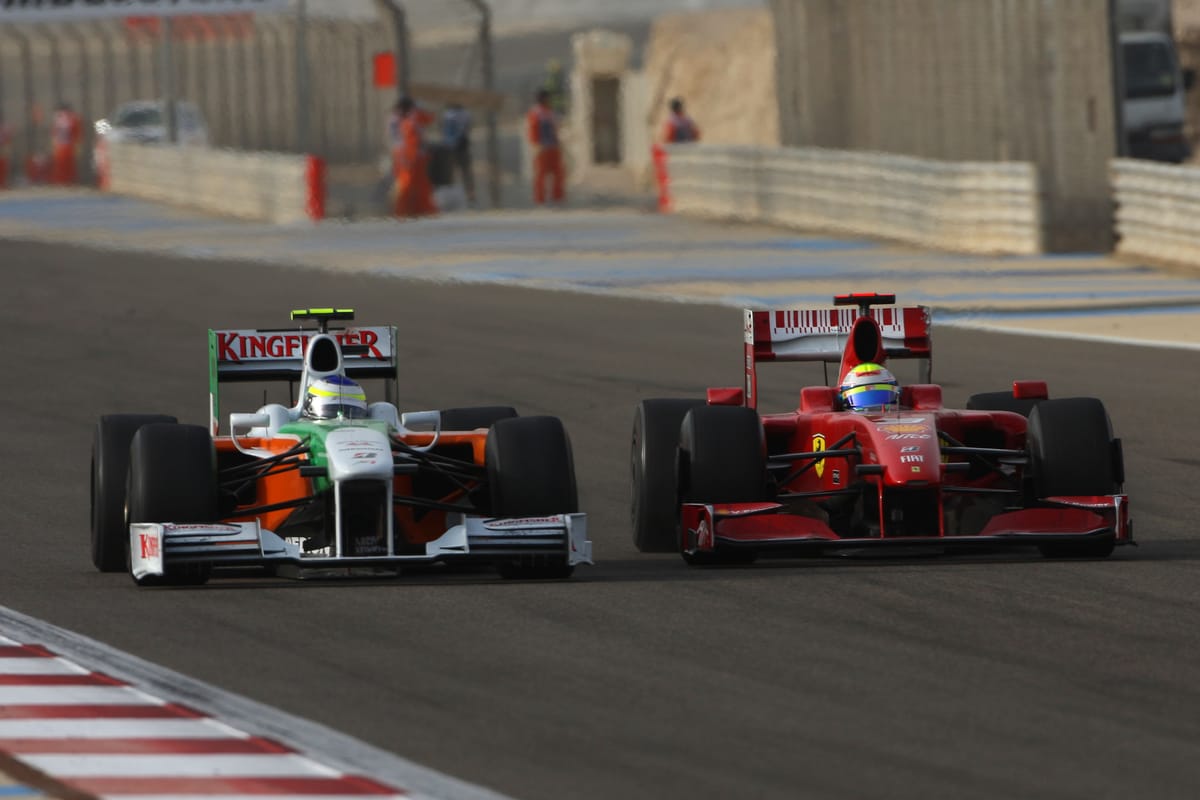
- Intended Purpose: OWG studies showed cars lost a significant 20-30% of their downforce when running in another's wake. The adjustable front wing, which allowed a +/- 3 degree change twice per lap, was designed to help a following driver mitigate this loss and close in for a move.
- The Unintended Reality: The system proved largely ineffective at actually improving a driver's ability to overtake. Instead, teams and drivers quickly repurposed it as a sophisticated tool to manage car balance over a race stint, especially as fuel loads changed.
- A Driver's Tool: The ban on refueling in 2010 made the wing even more valuable for balance management. McLaren's Jenson Button notably lamented its removal, stating it would be "tough" to manage the massive balance shift from a heavy 150kg fuel load at the start to a light 5kg load at the end.
- Replaced by DRS: The adjustable wing was dropped for the 2011 season to make way for the Drag Reduction System (DRS). While controversial, DRS proved far more direct and effective at creating overtaking opportunities in designated zones.
The big picture:
The failure of the adjustable front wing underscores a fundamental truth in F1: solving the 'dirty air' problem is incredibly difficult, akin to "pushing water uphill." The laws of physics are stubborn, and aerodynamic solutions often have significant trade-offs. While the 2009 experiment is now a minor footnote in F1's history, its legacy lives on as a reminder of the long, arduous journey the sport has undertaken—and will continue with its 2026 rules—to create better wheel-to-wheel racing.
Original Article :https://www.the-race.com/formula-1/when-f1-last-had-adjustable-front-wings-and-w...
