



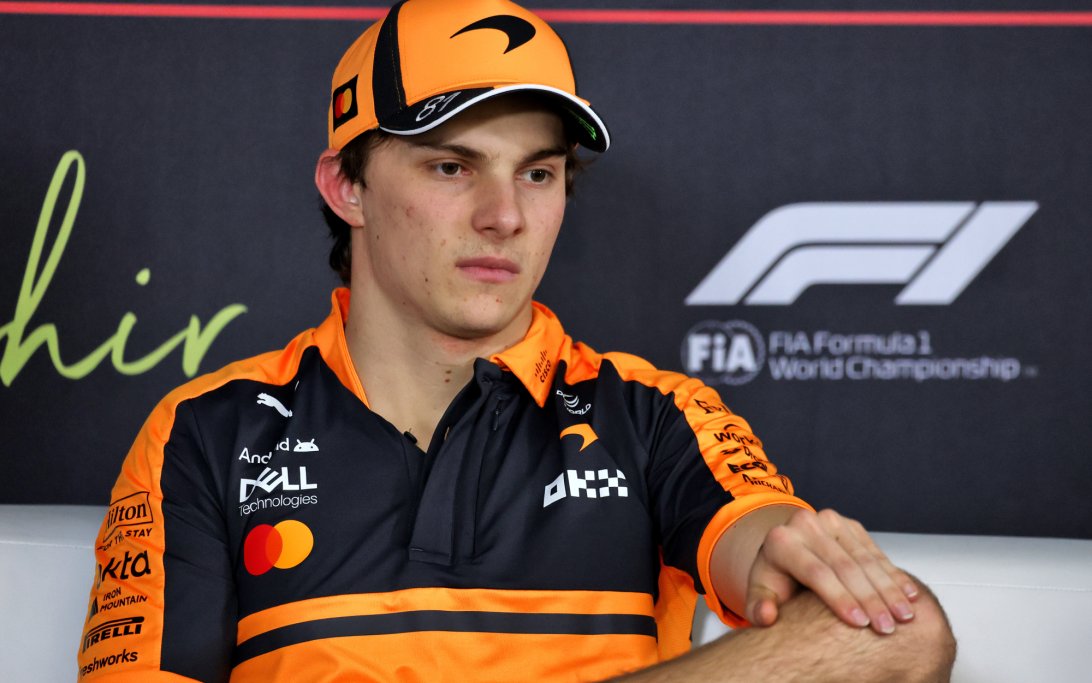
Piastri warns of 'abnormalities' with 2026 F1 energy harvesting
McLaren's Oscar Piastri warns that Formula 1 drivers will face significant "abnormalities" in racing at certain circuits starting in 2026 due to the new power unit regulations. The 50-50 split between internal combustion and electrical power will force drivers into extreme energy harvesting, fundamentally altering cornering and race management, particularly on tracks with long straights and few heavy braking zones.
Why it matters:
The 2026 power unit rules represent one of the most significant technical shifts in recent F1 history, aiming for greater electrification and sustainability. How drivers and teams adapt to the aggressive energy harvesting demands will directly impact race strategy, on-track action, and could create unexpected performance gaps, reshaping the competitive order based on who masters the new energy management first.
The details:
- New Power Split: The 2026 regulations mandate a 50-50 power output between the traditional internal combustion engine (ICE) and a significantly more powerful battery unit.
- Increased Harvesting Demand: This balance requires drivers to harvest vastly more energy under braking than the current cars to avoid depleting the battery and being left with ICE power only.
- Track-Dependent Challenge: Piastri highlights that the problem is not universal but heavily dependent on circuit layout.
- Less Impactful: Tracks like Bahrain and Montreal's Circuit Gilles Villeneuve, with numerous heavy braking zones, will see less disruption as energy can be harvested naturally.
- Major Disruption: The issue becomes acute at circuits like the Australian Grand Prix in Melbourne and the Saudi Arabian Grand Prix in Jeddah. These tracks feature long straights linked by fast corners with minimal heavy braking opportunities.
- Driver's Perspective: From simulator work, Piastri notes that at these affected tracks, drivers will be "harvest-limited," leading to extensive "lift and coasting"—lifting off the throttle early before a corner to harvest energy—or aggressive energy clipping strategies.
- Strategic Flexibility: While settings are largely pre-programmed, drivers will have some ability to adjust harvesting levels on the fly, adding a new real-time strategic layer to in-car management.
What's next:
The 2026 season will present a steep learning curve, with early races likely serving as live tests for the new energy management paradigm. Teams will need to develop sophisticated simulations and strategic models tailored to each circuit's characteristics. Piastri's comments suggest that races in Melbourne, Jeddah, and similar layouts could look dramatically different, placing a premium on efficient energy harvesting in car design and intelligent deployment in the driver's hands. Mastering this new variable will be a key differentiator for success under the new regulations.
Original Article :https://racingnews365.com/oscar-piastri-warns-of-abnormalities-over-growing-f1-c...