







Monaco GP 2026: F1 Cars' Top Speeds Capped as Battery and Aero Rules Shift
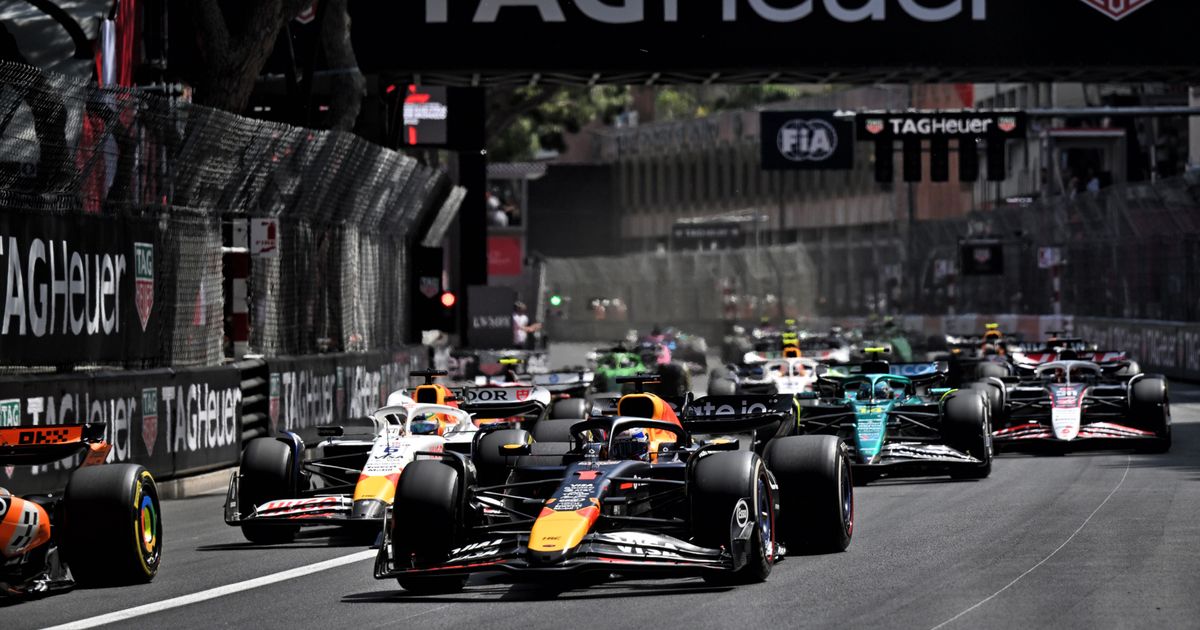
Monaco's tight streets will force F1 cars to run with reduced top speeds this weekend, thanks to two regulation adjustments unique to the principality. Battery energy deployment will begin tapering off at just 200 km/h instead of the usual 290 km/h, while the low-drag 'straight mode' active aero system will not be used at all — a first for the 2026 season.
Why it matters:
Monaco is already the hardest track to overtake on, and these changes will make it even more about driver precision and mechanical grip rather than raw power. Teams that have relied on straight-line speed or aggressive energy strategies will have to adapt their entire approach to the weekend.
The details:
- Battery deployment cap: According to The Race, the MGU-K output will start reducing from around 200 km/h, with all electrical assistance exhausted by 300 km/h. This prevents cars from benefiting from electric boost at the highest speeds, a deliberate move to reward corner-exit traction over pure acceleration.
- Energy management ease: Monaco's abundance of braking zones and low-speed corners means drivers can recover energy much more easily than on typical circuits. Lift-and-coast and aggressive harvesting will be far less critical.
- No straight mode: The FIA's official circuit documentation includes zero activation zones for the active aero low-drag configuration. This is the first race of 2026 where drivers cannot use the system.
- FIA reasoning: The sport's governing body requires any straight mode zone to allow at least three seconds of activation. Monaco's layout — short acceleration bursts followed by immediate braking — failed that criterion, and the FIA also feared that rapid activation/deactivation could create stability issues on a track with no run-off.
Between the lines:
These adjustments effectively neuter two of the most impactful innovations of the 2026 regulations — electrical deployment profiles and active aerodynamics — leaving teams to rely almost entirely on chassis setup and driver skill. For a team like McLaren, which has excelled with Mercedes' strong power unit and aero efficiency, the change could level the playing field. For Red Bull, which has struggled with balance on low-speed circuits, Monaco might offer a rare opportunity to close the gap.
What's next:
Drivers will have to rethink braking points and throttle application, as the lack of top-end power and absence of straight mode will shift focus to mechanical grip and suspension compliance. Qualifying — always the key to Monaco — becomes even more critical, as passing on race day will be nearly impossible if these restrictions hold.
Original Article :https://www.gpblog.com/en/news/monaco-gp-to-feature-earlier-battery-deployment-c...
