



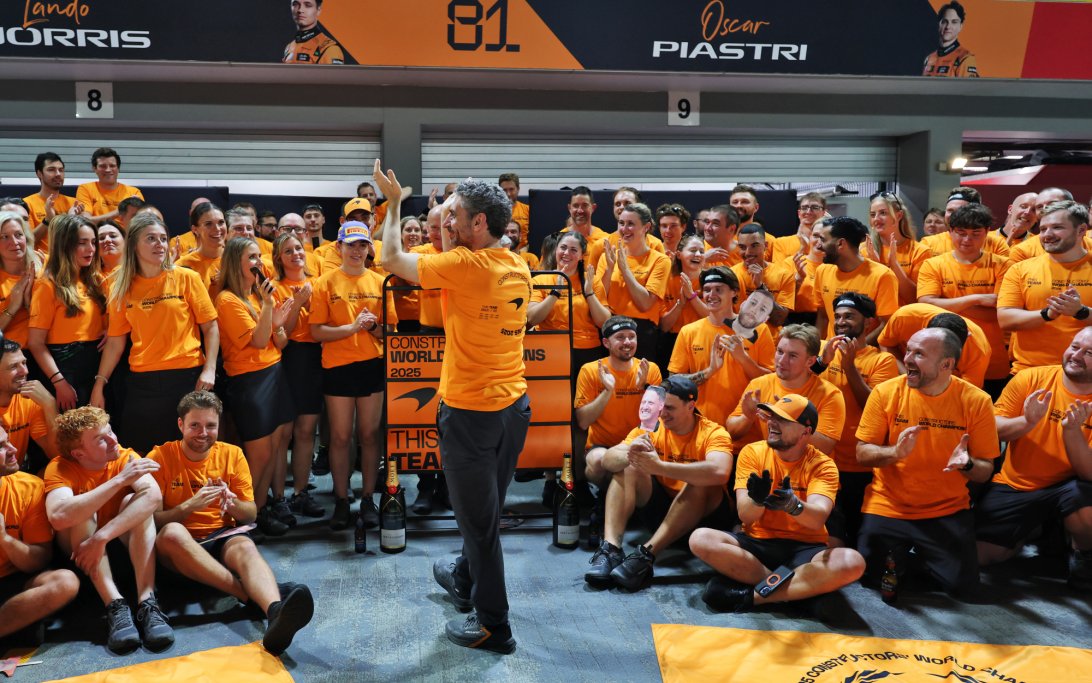
McLaren cites six reasons for optimism heading into the 2026 season
McLaren’s technical department, praised by team principal Andrea Stella, has turned a mid‑grid car into a championship‑winning machine in just two years. That track record, combined with a clear development process, gives the Woking‑based outfit confidence as the sport heads into the 2026 regulation overhaul.
Why it matters:
The 2026 season will see the first complete power‑unit rewrite since 2014 and a radical change to aerodynamic rules. Teams that can translate a strong engineering culture into rapid, reliable upgrades will have a decisive edge. McLaren’s recent ability to climb from 9th‑10th in 2023 to both the constructors’ and drivers’ titles by 2025 shows it can thrive under a fresh rulebook, and its partnership with Mercedes provides a stable power‑unit supply that can be fully exploited only by a top‑tier technical crew.
The details:
- Peter Prodromou – Technical Director, Aerodynamics: steers the new floor concept and manages airflow integration under the upcoming low‑rake regulations.
- Rob Marshall – Chief Designer: responsible for marrying the Mercedes power unit and gearbox with a chassis that maximises mechanical grip and cooling.
- Neil Houldey – Technical Director, Engineering: oversees the performance‑data pipeline that turns wind‑tunnel and CFD results into on‑track gains.
- Mark Ingham – Director of Design: leads the rapid‑iteration design process that delivered the MCL60’s evolution into the title‑winning MCL39.
- Giuseppe Pesce – Director of Aerodynamics & Chief of Staff: coordinates cross‑department collaboration, ensuring aerodynamic upgrades align with power‑unit integration.
- Mark Temple – Technical Director, Performance: focuses on tyre‑temperature management and vehicle dynamics to extract the last tenths of a second.
- Development approach: emphasizes incremental upgrades each race weekend, extensive simulation, and a tight feedback loop between drivers and engineers.
- Cultural continuity: the team retains a consistent engineering philosophy across the power‑unit transition, reducing the learning curve for new regulations.
Additional context:
- Regulation overhaul: 2026 introduces a new 1.6‑litre hybrid power‑unit architecture and a simplified front‑wing layout, resetting the performance baseline for all 11 teams.
- Recent turnaround: after a shaky start to the 2023 ground‑effects era, McLaren’s technical team delivered a car that climbed to the top of the standings by 2025, clinching both the constructors’ and drivers’ titles.
What's next:
Stella says the team’s development philosophy—rigorous testing, data‑driven decisions, and a clear chain of responsibility—will carry over into the new era. While the specifics of the 2026 rules differ, the underlying standards and collaborative culture remain unchanged. McLaren plans to integrate the Mercedes power unit early, refine its aerodynamic package through iterative wind‑tunnel work, and aim for a strong start at pre‑season testing in Bahrain and Jerez. The goal is to stay in the championship fight from day one, even as the new floor and cooling demands present fresh engineering challenges.
Original Article :https://racingnews365.com/mclaren-name-six-crucial-reasons-it-is-optimistic-for-...