




Ferrari Seeks Suzuka Confirmation After Intensive Factory Work
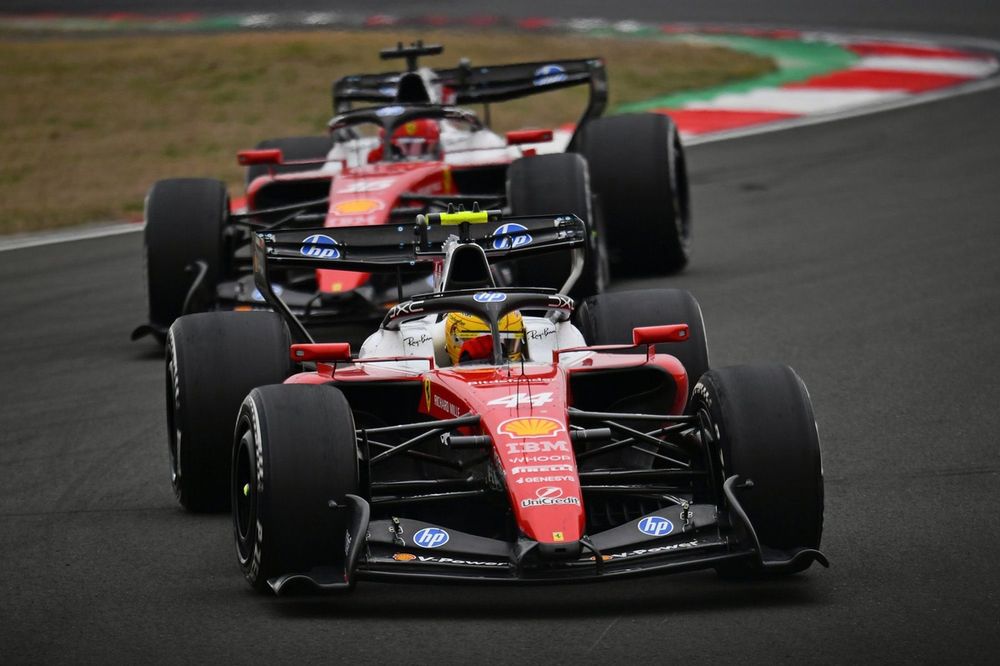
Ferrari heads to the Japanese Grand Prix seeking to validate significant upgrades developed at Maranello, aiming to close the performance gap to a dominant Mercedes. The Suzuka circuit presents a new type of challenge for the SF-26, particularly for its energy management system, with cold weather and a new track surface adding further variables. The Scuderia is banking on optimized power unit deployment and continued development of its innovative 'Macarena' rear wing to prove it can consistently challenge at the front.
Why it matters:
As the only team currently positioned to potentially disrupt Mercedes' early-season supremacy, Ferrari's performance in Japan is a critical benchmark. Success here would validate their aggressive development path and energy management concepts, while failure could force a strategic rethink. With a month-long break following this race, the data gathered at Suzuka will set the tone for Ferrari's development push to close the gap before the European season.
The Details:
- Power Unit Focus: Ferrari's primary weakness has been on long straights, where Mercedes' engine excels at high-speed battery recharging. Maranello's focus is not on directly copying Mercedes' approach but on maximizing its own package, particularly the potential of its smaller turbo.
- Energy Management Strategy: Engineers are working to optimize energy harvesting in slower corners and during transitions, potentially using lower gears to keep engine revs high. The fine setup to extract all available power from the 067/6 power unit is still a work in progress.
- Aerodynamic Experimentation: Development of the rotating 'Macarena' rear wing continues. While it offers a clear top-speed benefit when open, drivers reported balance instability during its closing phase in China, complicating braking.
- Work at the factory has focused on refining the wing's operation timing and adjusting the front flap to achieve a stable car balance, especially for a demanding track like Suzuka.
- A more sophisticated version of the wing, allowing different closing times for different corners, is also in development.
- Weight and Reliability: The current Macarena wing adds weight, a concern for the SF-26 which still needs to shed 6-7kg. Furthermore, reliability assessments of the complex system are ongoing alongside performance tuning.
What's Next:
The Japanese Grand Prix will be a decisive test of whether Ferrari's chosen development direction is competitive. Regardless of the outcome, the team will use the subsequent April break to analyze data and prepare further upgrades. A revised, potentially more transparent version of the small Halo-mounted flap (deemed a 'windscreen') seen in China may also reappear, pending FIA approval. Ferrari's immediate goal is to leave Suzuka with a clear understanding of their deficit to Mercedes and a concrete plan to address it during the break.
Original Article :https://www.motorsport.com/f1/news/f1-ferrari-takes-energy-recovery-to-the-extre...