



Are AI cars the future of motorsport?
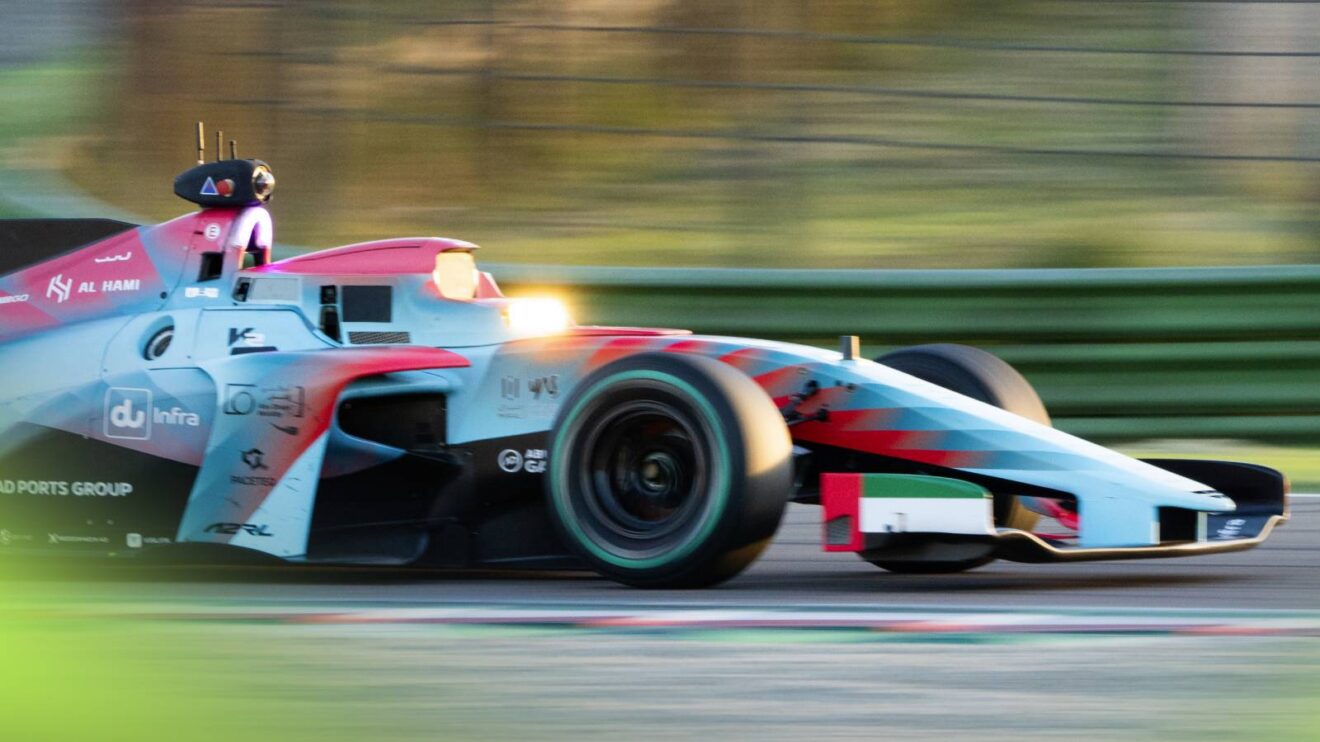
Autonomous racing has outgrown its novelty phase. At Imola's opening round of the Abu Dhabi Autonomous Racing League (A2RL), self-driving Super Formula cars lapped within one to five seconds of human benchmark drivers — a remarkable leap from the series' chaotic debut just two years ago. The question is no longer whether AI can race, but what that means for motorsport's future.
Why it matters:
F1's mystique is built on human bravery, legendary rivalries and wheel-to-wheel combat. Autonomous racing shifts the battlefield to code: teams of AI experts and engineers design the 'driver' instead of hiring one. A2RL is proving the concept at speed, and the pace of improvement suggests an AI could one day be faster than an F1 World Champion.
The Details:
- A2RL is organised by Abu Dhabi research facility ASPIRE. Every team runs an identical spec Super Formula car with full mechanical support, so the only variable is the artificial intelligence controlling it.
- No cockpit, no driver: Impact structures are removed and the cockpit is uninhabitable. Radar, LiDAR and advanced cameras feed data into each team's custom 'intelligence stack'.
- Coding a driver: PhD students, engineers and AI experts build algorithms for real-time track perception, localisation, trajectory planning and vehicle control. They balance aggression, control and speed to create a digital personality.
- Rapid progress: The first A2RL race in Abu Dhabi was unintentionally comical, with cars stopping behind each other and spinning in bizarre fashion. At Imola, the improvement was staggering — cars are now within a handful of seconds of human pace in similar machinery, with ex-F1 driver Daniil Kvyat and F4 racer Juju Noda serving as reference points.
- German constructor TUM won the first two championships, both over single-race events in Abu Dhabi. This year's expanded two-round format brought the series to Europe for the first time at Imola.
Between the lines:
The current product still lacks the romance of human racing. AI lines are calculated and controlled, with none of the bravery or desperation that defines F1's greatest battles. But A2RL is not trying to replace human motorsport — it is proof of concept. The software is improving at an extraordinary rate, and the moment an AI driver is faster than a Max Verstappen or Lando Norris may be closer than it appears.
What's next:
The season finale at Yas Marina will show how far the algorithms have come in a single season. As multi-car, wheel-to-wheel AI battles become more fluid, autonomous racing can carve out its own niche: not a threat to F1's human drama, but a high-speed showcase of engineering at its absolute limit.
Original Article :https://www.planetf1.com/news/ai-racing-autonomous-cars-f1-driver-pace