






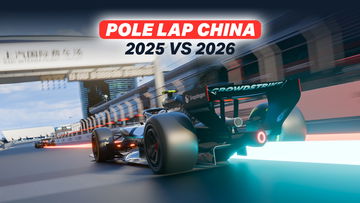
2025 vs 2026 Chinese GP Qualifying: A Historic Pole Position Comparison
A hypothetical comparison between the 2025 and 2026 Chinese Grand Prix qualifying sessions reveals the dramatic impact Formula 1's new technical regulations could have on lap times and competitive order. While 2025 represents the current era, the projected 2026 data, factoring in new power unit rules and lighter cars, suggests pole position could be significantly faster, potentially altering the historical hierarchy at the Shanghai International Circuit.
Why it matters:
The shift to new regulations in 2026 is the sport's most significant technical overhaul in a generation, aimed at creating closer racing and attracting new manufacturers. Analyzing its potential effect on single-lap performance, especially at a demanding circuit like Shanghai, offers an early glimpse into which teams might have interpreted the rules best. A major shake-up in qualifying pace could redefine the entire competitive landscape for the coming era.
The details:
- Regulation Overhaul: The 2026 season introduces radically new power units with a 50/50 split between internal combustion and electrical energy, alongside lighter and more aerodynamically efficient chassis. This combination is the primary driver for the projected lap time reduction.
- Power Unit Philosophy: The new engine rules favor electrical deployment and energy recovery. Teams like Mercedes and Ferrari, who are investing heavily in advanced energy recovery systems and novel combustion technology, are predicted to make significant gains.
- Aerodynamic Shift: Cars will be smaller and lighter, with a greater focus on active aerodynamics to reduce drag on the straights. This particularly benefits a circuit like Shanghai with its long back straight, where top speed will be even more crucial.
- Team Momentum: This analysis assumes teams like McLaren and Aston Martin continue their upward development trajectories into the new era, potentially closing the gap to the traditional front-runners in a qualifying duel.
- Driver Adaptation: The change in car characteristics will test drivers differently. Masters of qualifying like Max Verstappen and Charles Leclerc will need to adapt their styles to extract maximum one-lap performance from the new machinery.
What's next:
While this comparison is speculative, it sets the stage for the intense development race already underway in factories across the F1 grid. The true picture will only emerge during pre-season testing in 2026.
- The first races will reveal if any team has found a 'golden concept' or a hidden advantage akin to a new 'party mode' for the qualifying trim.
- Success in the new era will depend not just on raw power but on perfect integration of the complex power unit, chassis, and aerodynamics. The team that best masters this integration will likely be the one setting those historic pole positions.
Original Article :https://racingnews365.com/crazy-comparison-for-historic-f1-pole-chinese-gp-quali...