




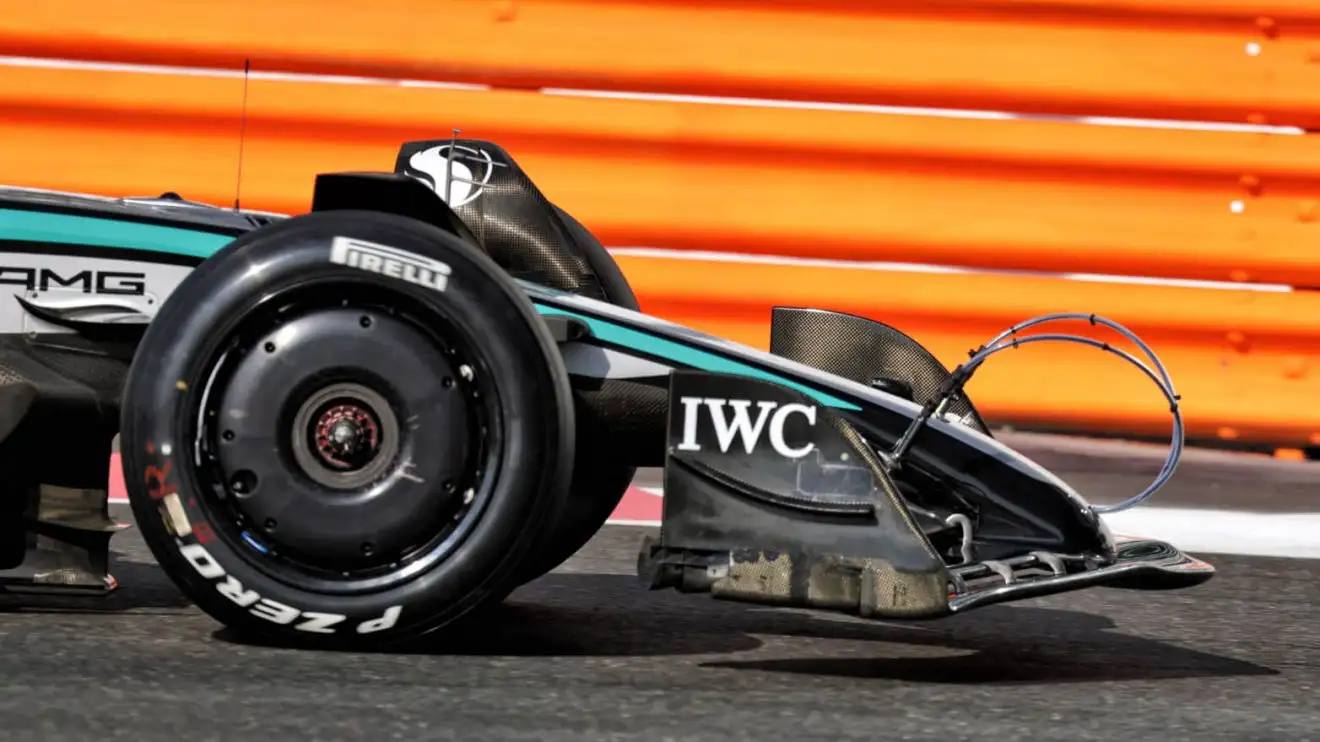
Mercedes Tests Rudimentary Active Front Wing in Abu Dhabi
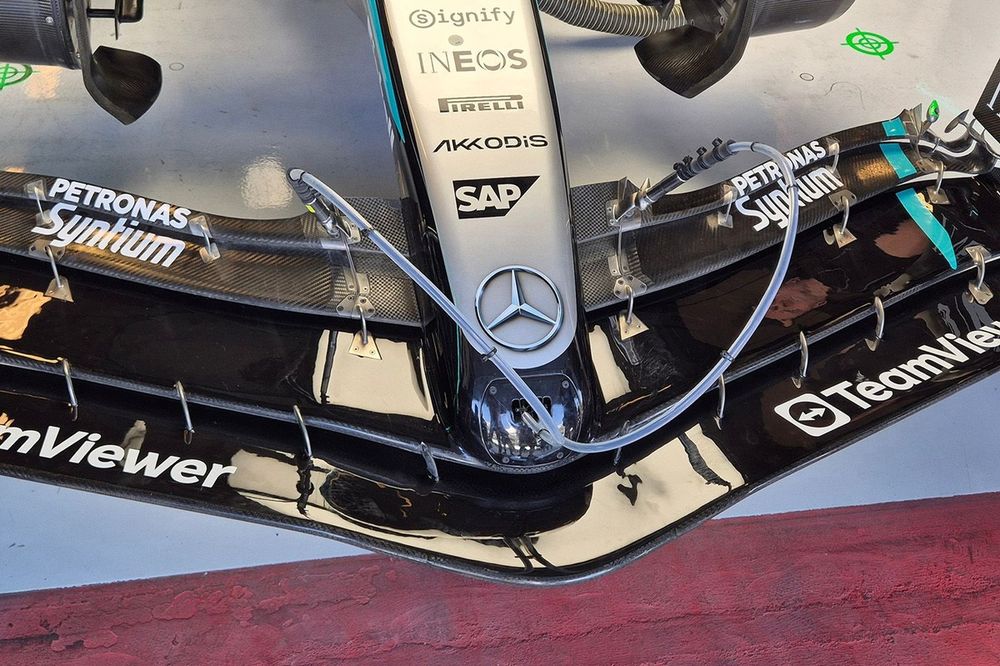
Mercedes debuted a rudimentary active front wing during Tuesday's Abu Dhabi post-season test, marking the first on-track validation of 2026's revolutionary aerodynamic regulations. The W16 mule car featured exposed tubing running from the nosecone to control two movable flaps, working in tandem with an active rear wing system to maintain balance across driving modes.
Why it matters:
This test represents F1's first concrete step toward its 2026 technical revolution, where active aerodynamics will replace ground-effect principles. The shift aims to enable closer racing through reduced downforce dependency, but requires precise engineering to prevent instability. Mercedes' early implementation—however crude—gives them valuable data in a development race where small advantages could determine competitive positioning two years out.
The Details:
- The active system uses two front flaps that adjust automatically based on rear wing positioning, maintaining aerodynamic balance during acceleration and braking.
- Mercedes' prototype featured visibly crude plumbing: exposed tubing ran externally from the nosecone to the wing mechanism, suggesting rapid prototyping rather than final packaging.
- Teams ran special 'mule cars' with 2026-spec tires and reduced downforce levels to simulate next-generation performance characteristics.
- Pirelli specifically requested active aero testing to gather tire behavior data under the new regulation framework, as active systems will significantly alter load dynamics.
- While Mercedes tested during morning sessions with rookie Kimi Antonelli, track sources confirmed Ferrari prepared a more integrated design for afternoon runs—indicating multiple teams are further along in development than publicly acknowledged.
What's next:
The Abu Dhabi test serves as just the opening chapter in F1's 2026 transformation. Teams will now analyze mountains of data to refine their active aero concepts before winter development intensifies.
- Expect rapid iteration on packaging, with Ferrari's reportedly more mature system suggesting Mercedes' crude approach was intentional for early validation.
- The real competitive implications will emerge during 2025's in-season testing, when teams can legally develop mule car components under current regulations.
- Crucially, the success of active systems will determine whether F1 achieves its goal of enabling closer racing—failure could mean unstable cars that undermine the regulation's core purpose.
While Mercedes claimed the 'first mover' headline, the true story lies in how quickly teams can evolve these systems from crude prototypes to race-ready solutions. The Abu Dhabi test proved the concept works; the next 18 months will determine who masters it.
Original Article :https://www.planetf1.com/news/first-look-mercedes-active-front-wing-design